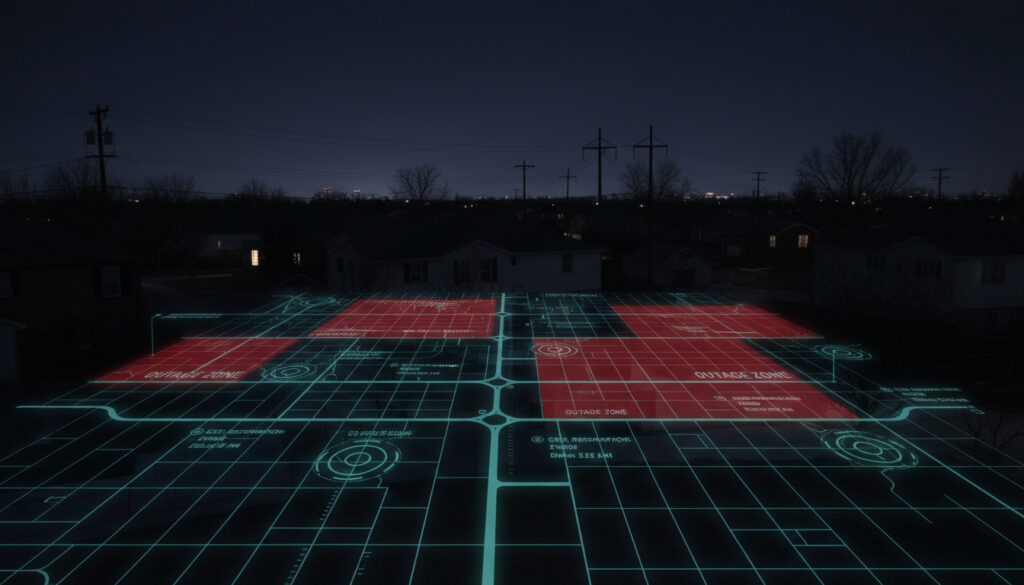
Energex Power Outage – Live Map and Restoration Times
When electricity fails across South East Queensland, Energex operates a real-time Outage Finder system that refreshes every fifteen minutes, pinpointing unplanned faults and scheduled maintenance from Brisbane to the Sunshine Coast.
Recent severe weather events have tested network limits, with monitoring reports indicating interruptions affecting more than 120,000 households across Brisbane, Ipswich, Redbank Plains, the Gold Coast, and Moreton Bay. Navigating these disruptions requires understanding how to access live status data, report new faults, and interpret fluid restoration timelines accurately.
Understanding the digital tools, reporting protocols, and restoration processes governing SEQ’s electricity distribution network helps residents navigate service interruptions effectively.
How to Check Current Energex Power Outage Status and Map
Interactive map and text views synchronized every 15 minutes
South East Queensland including Brisbane metro, Gold Coast, and Sunshine Coast
Suburb, street address, or postcode (e.g., 4000 for Brisbane City)
SMS and email notifications via MyEnergex registration
- The Outage Finder map integrates both emergency and planned interruption data simultaneously
- Text view alternatives provide accessible formats for screen readers and mobile devices
- Recent storms impacted over 120,000 households across SEQ regions
- Searches accept specific street addresses or broad suburban queries
- The system distinguishes between severe weather damage and technical equipment failures
- Data points update automatically without manual refresh requirements
| Attribute | Details |
|---|---|
| Service Territory | South East Queensland (SEQ) |
| Primary Interface | Outage Finder (Map & Text Views) |
| Update Frequency | Every 15 minutes |
| Official Hotline | 13 62 62 |
| Mobile Application | MyEnergex |
| Planned Outage Duration | Typically 6-8 hours |
| Common Triggers | Storms, wildlife, vehicle accidents, technical faults |
| Recent Scale | 120,000+ households affected (severe weather events) |
How to Report a Power Outage to Energex
When residences lose power and the emergency outages text view shows no local faults, residents must initiate fault reports through designated channels. Safety protocols demand verifying immediate hazards before contacting operators.
Digital Reporting Pathways
The Energex outages portal hosts secure web forms for submitting fault details, property addresses, and contact information. This method suits non-urgent situations where neighbors confirm shared interruptions.
Telephone Reporting
Dialling 13 62 62 connects directly to network operations centers. This line handles new fault declarations and provides automated status updates on surrounding incidents. Callers should prepare specific street addresses and observable damage details, such as downed power lines or smoking transformers.
Verify your home’s circuit breakers and fuses before contacting Energex. Isolated property faults often stem from internal electrical systems rather than network distribution issues.
Energex Power Outage Restoration Times and Durations
Restoration schedules diverge sharply between scheduled maintenance and emergency response scenarios. While planned work follows predetermined six-to-eight-hour windows, unplanned repairs fluctuate based on damage severity, accessibility, and meteorological conditions.
Estimated Restoration Time Methodology
The restoration estimation system weighs community safety risks against network destruction extent. Published ETRs prioritize critical infrastructure such as hospitals and emergency services, meaning residential repairs may follow major trunk line restoration. These projections update dynamically as field crews complete onsite assessments.
Duration Patterns by Outage Type
Planned maintenance typically occurs between 07:00 and 16:00 to minimize overnight disruption. Unplanned interruptions present wider variability, with severe weather events extending outages to 24 hours or longer while crews await safe access conditions. Recent regional reports confirmed multi-day recovery periods following infrastructure destruction.
Energex assigns repair crews based on public safety hazards first, followed by critical facility restoration, then by customer volume affected. Isolated single-property faults consequently resolve after major distribution line repairs.
Causes and Affected Areas for Energex Power Outages
Service interruptions originate from environmental forces, wildlife interactions, vehicle collisions, and deliberate infrastructure maintenance. Understanding these triggers clarifies why certain suburbs experience clustered outages while adjacent streets remain energized.
Environmental and Accidental Triggers
Severe weather dominates unplanned interruption causes, with gales, flash flooding, and high winds damaging poles and transformers across Brisbane and regional SEQ. Wildlife contact, motor vehicle accidents involving infrastructure, and equipment technical failures contribute additional fault volumes. During Bureau of Meteorology warnings, outage frequencies correlate directly with storm intensity. For the most up-to-date information on power restoration, consult the Energex live outage map at hotels near me policies.
Scheduled Maintenance Zones
Planned work affects specific streets and suburbs including Araluen, Berrinba, Birkdale, Bracalba, Broadbeach, East Brisbane, and Fairfield. Scheduled maintenance listings display precise dates, streets, and time windows. Recent cancelled work in Biarra, Eagle Farm, Esk, and Ottaba demonstrates the fluid nature of infrastructure planning.
Network damage from severe weather inevitably delays restoration timelines. Crews must wait for conditions to stabilize before accessing damaged infrastructure safely, extending ETMs beyond standard repair estimates.
Timeline: From Outage Detection to Power Restoration
Network faults follow a standardized operational sequence that determines when electricity returns to affected properties.
- Fault Initiation: Weather events, accidents, or equipment failures trigger protection systems or customer reports.
- System Detection: Automated systems and control room operators identify the affected circuit within minutes.
- Public Mapping: The Outage Finder populates with preliminary data within 15 minutes of confirmation.
- Crew Dispatch: Field teams receive priority assignments based on safety protocols and customer impact.
- Site Assessment: Technicians evaluate structural damage to poles, conductors, and transformers.
- ETR Publication: Initial restoration estimates appear on public platforms, subject to revision.
- Repair Execution: Replacement of damaged components and safety testing precedes re-energization.
What We Know and What Remains Uncertain
Distinguishing between verified data and variable projections helps residents set realistic expectations during service interruptions.
| Established Facts | Variable or Uncertain Elements |
|---|---|
| Planned outage schedules publish 6-8 hour windows with specific street addresses | Exact restoration times for unplanned outages dependent on damage assessment |
| Outage Finder refreshes automatically every 15 minutes | Real-time crew locations and specific repair progress at individual fault sites |
| Official report line 13 62 62 operates continuously | Duration until weather permits safe repair access during severe storms |
| MyEnergex delivers confirmed SMS and email notifications | Precise customer counts for rapidly evolving multi-suburb events |
Severe Weather and Network Resilience
South East Queensland’s subtropical climate exposes infrastructure to cyclones, electrical storms, and flash flooding. While networks incorporate redundancy and protection systems, extreme meteorological events overwhelm automated safeguards. Preparation strategies, including understanding What Is Kefir – Benefits, Nutrition and How to Make It, contribute to household readiness, though nutritional planning represents only one component of comprehensive outage preparation.
During declared disaster events, restoration follows emergency management hierarchies prioritizing hospitals, water treatment facilities, and emergency services. This triage approach means residential streets may remain offline while adjacent critical infrastructure receives immediate attention, depending on grid topology and load distribution.
Official Statements and Data Attribution
Current outage information derives from official Energex communications and verified network monitoring.
Community safety remains the absolute priority during emergency response operations. Network damage from severe weather inevitably delays restoration activities.
— Energex Storm Response Documentation
Estimated Restoration Times prioritize public safety and network damage extent, updating as field crews progress through assessment and repair phases.
— Network Operations Analysis
Key Takeaways for SEQ Residents
Monitoring the Outage Finder provides real-time clarity during interruptions, while the 13 62 62 hotline serves when digital access fails. Residents should verify internal electrical systems before reporting, register for proactive MyEnergex notifications, and maintain emergency supplies for extended weather-related outages. Transmission-level infrastructure falls under Powerlink jurisdiction, distinct from Energex distribution responsibilities. For alternative investment perspectives on infrastructure resilience, see Genesis Minerals Share Price – ASX GMD Latest Analysis.
Frequently Asked Questions
What should I do during an Energex power outage?
Check your home’s fuses first, then verify the Outage Finder. Report unlisted faults via 13 62 62. Avoid downed lines, use torches instead of candles, and preserve refrigerated food by keeping doors closed.
Can I receive SMS alerts before outages occur?
Yes. Register through the MyEnergex app or website to receive SMS and email notifications for planned maintenance and emergency updates in your area.
Why does my outage not appear on the map?
Individual property faults or recent disruptions may not display immediately. The system updates every 15 minutes. If power remains out after 30 minutes without map confirmation, call 13 62 62.
How accurate are the Estimated Restoration Times?
ETRs represent initial damage assessments and change as crews encounter additional obstacles or weather delays. Consider them guidance rather than guarantees.
What is the difference between Energex and Powerlink?
Energex manages low-voltage distribution networks connecting homes and businesses. Powerlink operates high-voltage transmission infrastructure. Report local outages to Energex; transmission issues appear separately on Powerlink’s system.
How long do most unplanned outages last?
Minor faults typically resolve within 2-4 hours. Severe weather damage can extend interruptions to 24 hours or longer depending on infrastructure destruction and safe access constraints.
More related posts
 Amanda Keller Biography: Career, Family
 Cate Blanchett: Biography, Rumors, and Career Highlights
 Gonzay com Home and Garden Reviews & Galway Garden Guide
 Dominic Purcell: Biography, Children, and Relationships
 Chris Brown Vet: Bio, Relationship, Diagnosis, and Career Updates
 Tom Yum Soup – Authentic Recipe, Ingredients and History
 Chris Kyle: Life, Death, and Legacy of the American Sniper
 Optus Activate SIM: Prepaid, Postpaid & Online Guide
