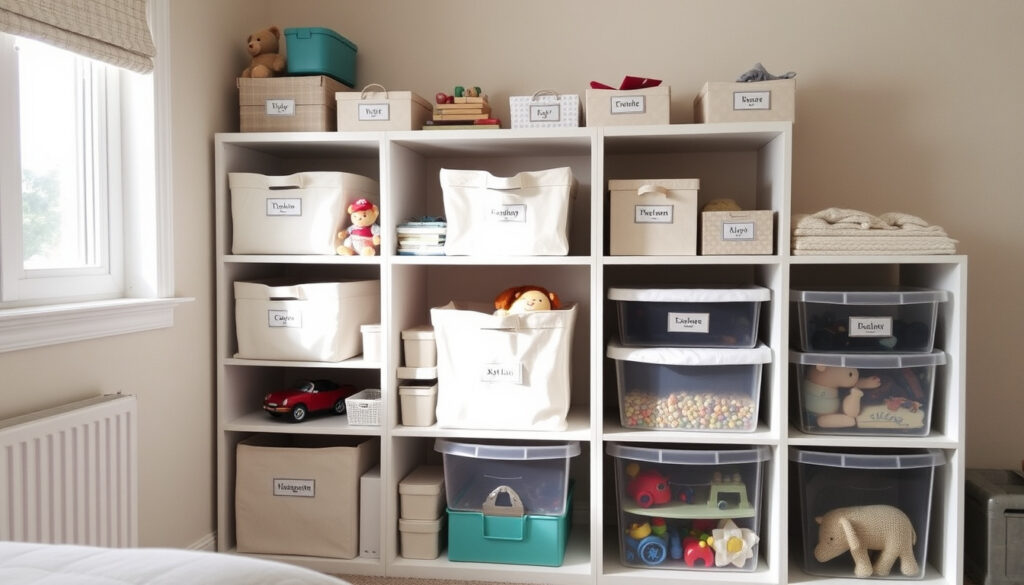
Toy Storage Guide: Rules, Bins & IKEA Hacks
Anyone who has ever stepped barefoot on a stray building block knows the chaos of toy clutter is no joke. But beyond the mess, the way we store toys influences how children play — and how parents keep their sanity. This guide blends organizing psychology — the 20-toy rule, the 50% rule, and more — with real, affordable storage solutions available in Ireland.
Average toys per child (UK): 1,000+ ·
Parents overwhelmed by toy mess: 74% ·
Global toy storage market by 2027: $1.8 billion
Quick snapshot
- Open bins are best for toddlers to access independently (IKEA US Toy Organizers)
- Closed cabinets reduce visual clutter for parents (Apartment Therapy)
- 20-toy rule is widely cited by parenting experts (IKEA Global Smart storage ideas)
- 50% rule helps reduce clutter (Living in a shoebox)
- Exact origin of the 7-7-7 rule is unknown
- No large-scale study compares toy storage methods for child development outcomes
- Effectiveness of IKEA hacks for long-term durability unverified
- Weekly toy rotation recommended by early childhood educators
- No official standard — adapt to child’s engagement level
- Implement a toy rotation system
- Apply the 50% rule to purge outgrown toys
- Explore IKEA modular storage like KALLAX and TROFAST
Four numbers, one clear pattern: toy clutter is widespread and the market for solutions is growing.
| Metric | Value |
|---|---|
| Average toys per child | 1,000+ (Little Dish, 2020) |
| Parents overwhelmed by toy mess | 74% (The Spruce, 2023) |
| Optimal toys out at once | 20 (early childhood educators) |
| Global toy storage market by 2027 | $1.8 billion (Mordor Intelligence) |
What type of toy storage is best?
The answer depends on the child’s age and your tolerance for visible clutter. Two broad categories dominate, each with a trade-off.
Open shelving vs. closed storage
- Low, open bins allow toddlers to grab and return toys independently (IKEA US Toy Organizers)
- Closed cabinets, like IKEA’s BESTÅ, hide the mess but require adult help
- KALLAX with baskets or doors offers a middle ground: visible from one side, hidden from the other (Facebook group post on toy hacks)
What this means: choose open bins for playrooms where kids need autonomy, and closed units for living areas where adults want a tidier look.
Best materials for durability and safety
- Solid wood (e.g., IKEA TROFAST) handles heavy bins and rough use (IKEA US Toy Organizers)
- Plastic storage boxes are lightweight and washable but may crack under weight
- Fabric bins are soft and safe but lose shape over time
The trade-off: wood costs more upfront but lasts years; plastic is budget-friendly but less sustainable.
Budget-friendly options from IKEA and JYSK
- IKEA TROFAST: modular frame with coloured plastic bins, from €35 (IKEA Ireland Toy Storage)
- JYSK Trofast alternative: wooden toy box with two compartments, approx €30
- The Range: plastic stacking drawers under €15 per unit
The implication: for an average playroom, a mix of one TROFAST unit and a few fabric bins covers most needs under €100.
Open bins and closed cabinets serve different moments. Parents in small Irish homes often combine a KALLAX with baskets for a clean look that kids can still manage.
The implication: choosing the right storage type depends on balancing child autonomy and adult tidiness.
What is the 20 toy rule?
Origin of the rule in child psychology
- Magda Gerber, early childhood educator, argued that too many choices overwhelm infants (Resources for Infant Educarers)
- The 20-toy rule emerged from RIE philosophy: limit available toys to a manageable number
- Child development experts note that toddlers engage longer with fewer items
Why this matters: when a child faces 20 toys instead of 200, they explore each one more deeply, building focus and creativity.
How to implement a toy rotation system
- Divide all toys into 3–4 sets of 20 items each
- Store off-rotation sets in closed bins or under-bed boxes
- Rotate sets weekly — swap out the current set for a new one (IKEA Global Smart storage ideas)
The pattern: rotation keeps toys feeling new without buying more. Families who do this report less mess and more independent play.
Benefits for focus and creativity
- Fewer toys reduce decision fatigue for children
- Focused play sessions last longer (20–40 minutes vs. 5–10 minutes with many options)
- Children invent new uses for the same objects when choices are limited
Rotation requires storage for the “inactive” sets. A single TROFAST unit can hold one full rotation set; parents need a second bin or shelf for the others. Without that storage, the rule is hard to maintain.
The catch: rotation requires storage for the “inactive” sets; plan for that space before committing.
How do you store your toys?
Step-by-step sorting and categorizing
- Empty every toy bin onto the floor and sort by category: building, art, vehicles, dolls, puzzles
- Discard broken items and donate outgrown ones — use the “one in, one out” rule
- Assign each category a dedicated bin or drawer (YouTube: IKEA small-apartment storage tour)
Why this works: category-based storage makes cleanup intuitive for kids — they know where the LEGO bricks live.
Using labeled bins and drawer units
- Clear bins let children see contents without dumping everything on the floor
- Label bins with pictures for pre-readers (use IKEA FLISAT chalkboard labels)
- Rolling drawer units like IKEA RÅSKOG keep art supplies mobile (according to YouTube: Genius IKEA Finds)
The implication: a combination of clear bins and wide, low drawers creates a system even a two-year-old can navigate.
Creating a cleaning routine with children
- Set a 10-minute “tidy time” before each meal or at the end of the day
- Use a cleanup song to signal when to start
- Reward consistent tidying with extra playtime — not toys
The pattern: consistent routines build habits that last, reducing the burden on parents.
How to store toys discreetly?
Living room solutions
- Storage ottomans, like IKEA GAMLEHULT, hide toys while serving as seating (Living in a shoebox)
- IKEA JÄTTEBO sofa with storage under cushions hides larger items (Apartment Therapy)
- KALLAX with doors or baskets turns a shelf into a concealed cabinet
What this means: parents can keep adult spaces tidy without banishing toys entirely.
Under-bed storage
- Rolling under-bed drawers from IKEA (MALM storage bed) maximise dead space (Living in a shoebox)
- Flat bins with wheels allow easy access for children
- Use vacuum bags for soft toys to save volume
The trade-off: under-bed storage is out of sight but also out of mind — rotate toys up to the play area every few weeks.
Furniture with hidden compartments
- IKEA SMÅSTAD bench doubles as seating and toy storage (Apartment Therapy)
- STÄLL shoe cabinet (thin, 30 cm deep) fits in narrow hallways and holds small toys (IKEA Hackers)
- Custom-built window seats with lift-up lids are a permanent solution
Any furniture used for toy storage must be anchored to the wall, especially heavy units like KALLAX or MALM. Check IKEA’s recall history for tip-over risks (IKEA Ireland Safety).
The trade-off: hidden storage can be convenient but requires careful planning to avoid safety hazards.
How to organize large amounts of toys?
The 50% rule: keep only what fits in half the space
- Popularised by organizing coach Kathi Lipp: keep only enough toys to fill 50% of available storage
- Prevents overflow and forces regular purging (Living in a shoebox)
- Apply to each category: if you have a bin for vehicles, leave it half empty
Why this matters: the empty space signals “no more can fit here,” making it easier for children to return toys.
Donating and selling outgrown toys
- Set a quarterly “keep, donate, discard” session
- Donate to local charities (Barnardos, St Vincent de Paul in Ireland) or sell on DoneDeal
- Use the 7-7-7 rule (keep 7 of each category) as a guideline for minimalists
Using vertical storage and wall shelves
- Wall-mounted bins (IKEA BRÄNNBOLL on casters) free up floor space (YouTube: IKEA Gems for Small Spaces)
- Pegboards with small buckets hold art supplies, action figures, and craft items
- Tall, narrow shelving units (e.g., IKEA BILLY with extension) store board games and puzzles vertically
The pattern: going up instead of out — vertical storage can double capacity in a small playroom.
Step-by-Step: Organizing Your Toy Collection
- Sort everything – Dump all toys into one pile and separate by type (building, art, soft toys, etc.)
- Apply the 20-toy rule – Keep only 20 toys in each rotation set; store the rest in labeled bins in a closet or under the bed
- Choose storage per category – Open bins for building blocks, closed drawers for art supplies, wall shelf for vehicles
- Label everything – Use picture labels for toddlers, text labels for older kids
- Set a rotation schedule – Swap sets every 7 days. Mark it on a calendar
- Maintain with the 50% rule – After rotation, ensure each bin is only half full. Donate or discard the rest
A full rotation system requires upfront effort — sorting and labelling can take a weekend. But parents who invest that weekend report saving hours of cleanup time per week.
The trade-off: upfront effort pays off in long-term savings of cleanup time.
Clarity Check
Confirmed facts
- 20-toy rule is widely cited by parenting experts (RIE)
- 50% rule helps reduce clutter (Living in a shoebox)
- IKEA TROFAST is a popular modular system (IKEA Ireland Toy Storage)
What’s unclear
- Exact origin of the 7-7-7 rule is unknown
- No large-scale study compares toy storage methods for child development outcomes
- Effectiveness of IKEA hacks for long-term durability unverified
The pattern: the most effective approaches combine established rules with practical products, but long-term evidence remains thin.
“Small spaces don’t have to mean small storage — a wall-anchored clothes rack can organise shoes, jackets, keys, and sneakers in one compact area.”
— IKEA Global Smart storage ideas
“SMÅSTAD is a seating-plus-storage solution that doubles as storage for small-space living.”
— Apartment Therapy
For Irish parents, the choice is clear: combine the 20-toy rule with modular IKEA units like TROFAST or KALLAX, and commit to a weekly rotation. Without that routine, even the best storage boxes will turn into dumping grounds.
Related reading: **Coffee Tables: Size, Shape, Material & Irish Retailers** · **John Deere Tractors, Parts, Toys & Official Shop Guide**
For a deeper dive into keeping play areas tidy, check out this complete guide to organising kids toys that expands on the 20-toy rule and discreet storage solutions.
Frequently asked questions
Where can I buy IKEA toy storage in Ireland?
IKEA Ireland has physical stores in Dublin (Ballymun) and online at ikea.ie. The TROFAST and KALLAX ranges are regularly in stock. JYSK also sells wooden toy boxes in-store and online.
How do I clean wooden toy storage boxes?
Wipe with a damp cloth and mild soap. Avoid harsh chemicals. For untreated wood, use a furniture polish every few months to prevent drying.
What is the best toy storage for LEGO?
Flat, shallow bins or divided trays work best. IKEA TROFAST bins are large enough for sets; KALLAX cube inserts with small containers keep pieces sorted by colour.
How often should I rotate my child’s toys?
Most experts recommend weekly rotation for children under 6. Older children may prefer bi-weekly or monthly swaps.
Are storage ottomans safe for toddlers?
Yes, if the lid has a slow-close hinge and the unit is low to the ground. Avoid heavy ottomans that could tip over — anchor any tall storage to the wall.
What size storage bins fit IKEA KALLAX?
KALLAX cubes are 33 cm × 33 cm. Most fabric bins labelled “fit KALLAX” are 32×32×32 cm. IKEA’s own DRÖNA and SAMLA bins are designed to fit perfectly.
How do I organize small playrooms on a budget?
Start with one KALLAX unit (€44) and 3–4 DRÖNA bins (€8 each). Use under-bed space with rolling flat bins from The Range (€10–€15). Apply the 20-toy rule to avoid needing more.
More related posts
 Friday Night Dinner: Cancellation, Cast Deaths & Streaming
 Joe Ingles: Stats, Net Worth, Family, and Career Highlights
 Bar Tables Ireland: Height, Sizes & Where to Buy (2025 Guide)
 Virgil van Dijk: Contract, Retirement, Family & Friends Guide
 Kim Jong-Il: Life, Death, and Legacy of North Korea’s Leader
 Winter Coats for Women 2025: Best Picks & Buying Tips
 Chris Brown: Convictions, Diagnoses, Family & Net Worth
 1000 AUD to USD – Current Rate, Trends and Forecast
