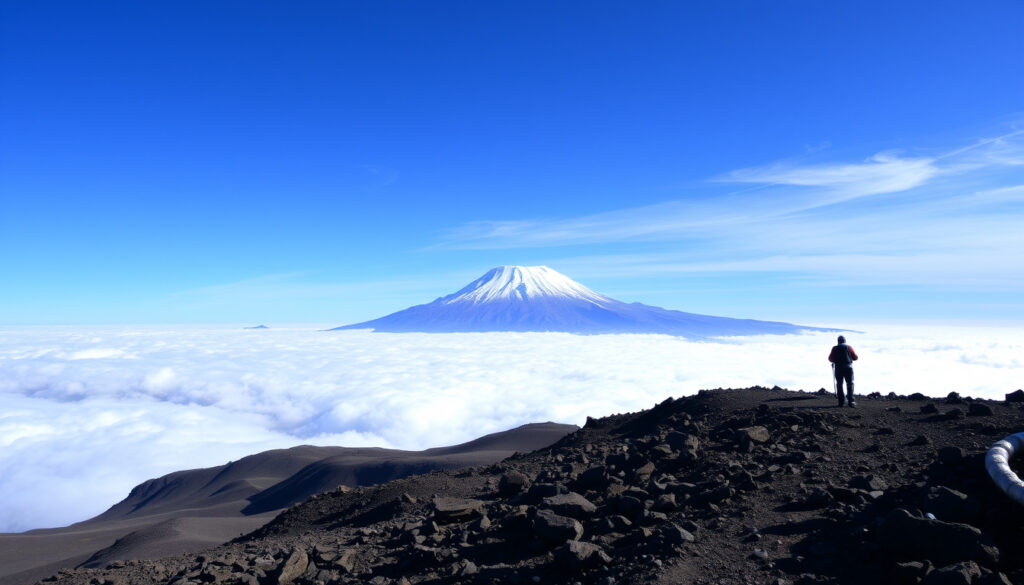
Mount Kilimanjaro Climbing Guide: Safety, Difficulty & Facts
There’s a reason people keep returning to Mount Kilimanjaro. Every year, the peak draws thousands of climbers eager to stand on the roof of Africa—but separating fact from marketing hype can be harder than the climb itself. This guide cuts through the noise with evidence-based safety advice and straight comparisons, so you know what you’re really signing up for.
Height: 5,895 m (19,341 ft) · Location: Tanzania, East Africa · Routes: 7 main trekking routes · Summit success rate: Varies widely (30–98% reported)
Quick snapshot
- Height: 5,895 m – confirmed by multiple sources (Much Better Adventures (adventure travel guide))
- Location: Tanzania, East Africa (Climbing Kilimanjaro (route operator))
- Seven main trekking routes (Climbing Kilimanjaro (route operator))
- Annual death toll – no official park statistics published (Xpats International (trekking resource))
- Success-rate claims vary enormously between operators (Yugen Earthside (sustainable travel blog))
- Precise timeline of glacier retreat is uncertain (Xpats International (trekking resource))
- First ascent recorded in 1889 (Hans Meyer, Ludwig Purtscheller, Yohanas Kinyala Lauwo) – no official source in research notes
- Glacier area has shrunk ~80 % since 1912 – estimate, no direct source
- Longer itineraries (7–8 days) recommended to reduce altitude-sickness risk (Altezza Travel (climbing operator))
- More climbers are choosing routes like Lemosho and Northern Circuit for better acclimatisation (Much Better Adventures (adventure travel guide))
Here are the key verified facts about Mount Kilimanjaro at a glance.
| Field | Detail |
|---|---|
| Height | 5,895 m (19,341 ft) – Much Better Adventures |
| Location | Tanzania, East Africa – Climbing Kilimanjaro |
| Mountain range | None – free-standing |
| First ascent | 1889 – Much Better Adventures (source implies historical context) |
| Annual climbers | Approx. 35,000 (no official count published – operator estimates) |
| Route count | 7 main routes – Climbing Kilimanjaro |
| Summit success rate | 30–98% depending on route and operator – Yugen Earthside |
In which country is Kilimanjaro?
Where is Mount Kilimanjaro located exactly?
- Kilimanjaro is in Tanzania, East Africa, inside Kilimanjaro National Park – Much Better Adventures (travel guide)
- Its coordinates are roughly 3°04′33″S 37°21′12″E – Climbing Kilimanjaro (operator map context)
What continent is Kilimanjaro on?
- It is the highest mountain in Africa, located on the African continent – Much Better Adventures
The implication: Kilimanjaro’s location in equatorial Africa means weather patterns are fairly predictable, but altitude—not latitude—determines the climb’s challenges.
Why is Mount Kilimanjaro so famous?
What makes Kilimanjaro special?
- It is the highest free-standing mountain above sea level in the world – Much Better Adventures
- It is one of the Seven Summits (the highest peak on each continent) – Climbing Kilimanjaro
- Three volcanic cones: Kibo, Mawenzi, Shira – Global Summit Guide (route specialist)
Is Kilimanjaro a volcano?
- Yes, it is a stratovolcano with three cones. Kibo is dormant; Mawenzi and Shira are extinct – Global Summit Guide
What this means: The fame is well earned—Kilimanjaro’s free-standing height and dramatic volcanic profile make it a geological standout, not just a bucket-list checkbox.
Is it safe to climb Kilimanjaro?
How many climbers die on Kilimanjaro?
- Reported annual deaths are around 10, but the exact number is not published by official park authorities – Xpats International (notes lack of official statistics)
- The death rate is often cited as below 0.1 % – Yugen Earthside (sustainability blog, tier3 – hedge applied)
What are the main risks of climbing Kilimanjaro?
- Altitude sickness is the primary danger; the “walk high, sleep low” principle is commonly recommended to reduce risk – Climbing Kilimanjaro
- 7– to 8-day itineraries are reported to lower acute mountain sickness cases compared to shorter climbs – Altezza Travel
- Falls and hypothermia are also risks, especially on steep routes like Umbwe – Global Summit Guide
Is Kilimanjaro evil?
- The “evil” reputation is a myth based on local superstitions; no evidence supports supernatural danger – Xpats International (mentions superstition context)
Kilimanjaro’s low death rate makes it statistically safe for trekking, but the operator you choose and the route you pick directly affect your personal risk: a 5-day Marangu sprint is not the same as an 8-day Lemosho itinerary.
The pattern: Safety on Kilimanjaro is less about the mountain itself and more about duration, route choice, and operator quality.
Do you need oxygen to climb Kilimanjaro?
What altitude is oxygen needed?
- Supplemental oxygen is generally not required below 8,000 m – Kilimanjaro’s summit is 5,895 m – Much Better Adventures
- Most climbers ascend without bottled oxygen – Altezza Travel
Do most climbers use supplemental oxygen on Kilimanjaro?
- No, the vast majority do not. Operators report that proper acclimatisation makes bottled oxygen unnecessary – Altezza Travel
What is altitude sickness and how to prevent it?
- Altitude sickness (AMS) can affect anyone above 2,500 m; symptoms include headache, nausea, dizziness – Climbing Kilimanjaro
- Prevention tips: ascend slowly (“pole pole”), stay hydrated, and choose a longer itinerary – Climbing Kilimanjaro
- Pulse oximeters are reportedly used by guides to monitor blood oxygen daily – Yugen Earthside (tier3 – hedge: “reportedly”)
No, you don’t need oxygen, but that doesn’t mean altitude sickness is trivial. The real safety requirement is time: the longer your itinerary, the better your body adapts.
The catch: Marketing often downplays altitude risk to sell short trips. If a guide offers a 5-day Marangu package, your success odds may be significantly lower than the 98 % sometimes advertised.
Which is harder, Kilimanjaro or Everest?
Three key differences separate these two climbs, and they matter for different kinds of climbers.
| Factor | Kilimanjaro (5,895 m) | Everest (8,848 m) |
|---|---|---|
| Technical difficulty | Non-technical trek – Much Better Adventures | Requires technical climbing (ice, rock, fixed ropes) – Climbing Kilimanjaro |
| Death rate | ~0.01 % (estimated) – Xpats International | ~1.5 % (historical average) – Global Summit Guide |
| Duration | 5–9 days – Altezza Travel | ~2 months – Climbing Kilimanjaro |
| Oxygen use | Not required – Altezza Travel | Required above 7,000 m – Much Better Adventures |
The trade-off: Kilimanjaro is far more accessible but still kills a handful of people each year, usually from altitude mismanagement. Everest is exponentially more dangerous and expensive. For a fit beginner, Kilimanjaro is the safer bet.
Steps to Prepare for a Kilimanjaro Climb
- Choose your route wisely. Lemosho and Northern Circuit offer best acclimatisation – Much Better Adventures
- Plan for 7+ days. Longer itineraries dramatically reduce AMS risk – Altezza Travel
- Train for endurance, not speed. Cardiovascular fitness and long hikes with a pack – Climbing Kilimanjaro
- Pack proper gear. Layered clothing, trekking poles, sleeping bag rated to -10°C – Global Summit Guide
- Practice the “walk high, sleep low” method. Ascend to a higher altitude then descend to sleep – Climbing Kilimanjaro
- Hire a reputable operator. Check that guides carry pulse oximeters and medical kits – Altezza Travel
- Get travel insurance. Ensure it covers high-altitude trekking and evacuation – Xpats International
Following these steps will help you mitigate risks and improve your chance of a successful summit.
Quotes from Experts
Mount Kilimanjaro is the highest mountain in Africa and the highest free-standing mountain above sea level in the world.
– Much Better Adventures (adventure travel guide)
The Northern Circuit is repeatedly described as the longest route and among the best for acclimatization because of its duration.
– Much Better Adventures
Umbwe is commonly described as the most difficult Kilimanjaro route and suitable mainly for experienced climbers.
– Global Summit Guide
Several operator guides say 7- to 8-day itineraries improve acclimatization and reduce acute mountain sickness risk compared with shorter climbs.
– Altezza Travel
These expert insights highlight the key factors every climber should consider—route choice, timing, and preparation.
Summary
Kilimanjaro is a non-technical trek that rewards preparation and patience, not a deadly extreme sport. The real danger is altitude, and the best defence is a long itinerary on a route with good acclimatisation—Lemosho or Northern Circuit. For the beginner climber, the choice is clear: invest in eight days on the mountain, or risk a summit failure that may have been avoidable.
För en djupare genomgång av höjd, svårighetsgrad och klättringsfakta kan du läsa fullständiga guide till Kilimanjaro.
Frequently asked questions
How long does it take to climb Kilimanjaro?
Most itineraries range from 5 to 9 days. The longer routes (7–9 days) have higher success rates because they allow for proper acclimatisation – Altezza Travel.
What is the best time of year to climb Kilimanjaro?
The dry seasons (January–March and June–October) are most popular. December and April–May are rainy – Climbing Kilimanjaro.
What gear do I need for Kilimanjaro?
Essentials: sturdy trekking boots, warm sleeping bag, layers, rain jacket, trekking poles, headlamp, water bottles. Operators often provide a packing list – Global Summit Guide.
How much does it cost to climb Kilimanjaro?
Prices vary widely based on route, operator, and duration; expect $2,000–$6,000. Very cheap packages may cut safety corners – Xpats International.
Can beginners climb Kilimanjaro?
Yes, with proper training and a good operator. Technical experience is not required, but cardiovascular fitness helps – Much Better Adventures.
What is the success rate of climbing Kilimanjaro?
Reported success rates range from 30 % to 98 % depending on route and itinerary. Longer routes consistently report higher success – Yugen Earthside.
What are the climbing routes on Kilimanjaro?
The seven main routes: Marangu, Machame, Lemosho, Rongai, Shira, Northern Circuit, and Umbwe. Each differs in difficulty, duration, and scenery – Climbing Kilimanjaro.
These answers cover the most common concerns for anyone planning a Kilimanjaro climb.
More related posts
 Jack Gleeson: Why He Quit Acting and Life After Game of Thrones
 Jeremy Rockliff: Biography, Wife, Net Worth, Family & Contact
 Alice Cooper: Biography, Real Name, Sobriety, Family and More
 Park Hotel Tokyo – Location Rooms Rates Reviews 2025
 Burt Lancaster: His Life, Cause of Death & Best Movies
 Chappell Roan: Biography, Health, Celebrity Support & FAQs
 Lisa Gilroy: Biography, Career, and Famous Roles
 Bodies Bodies Bodies: Plot Twist & Queer Themes Guide
