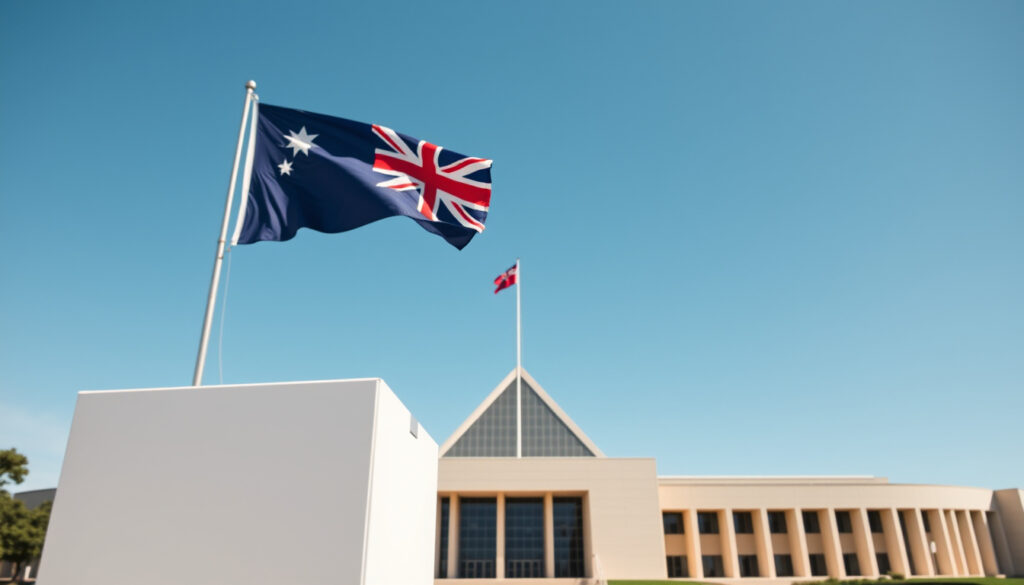
2025 Australian Federal Election: Date, Results, How It Worked
Few political events capture a nation’s attention like a federal election, and Australia’s 2025 vote was no exception. On 3 May 2025, Australians cast their ballots to elect the 48th Parliament, delivering a decisive Labor victory that reshaped the political map.
Election date: 3 May 2025 · Seats contested: 150 (House of Representatives) · Voter turnout: 90.70% · Winning party: Australian Labor Party (majority government) · Electoral authority: Australian Electoral Commission (AEC)
Quick snapshot
- Election held on 3 May 2025 (Australian Electoral Commission (official electoral authority))
- Labor won 94 House seats, Coalition 43, Greens 1, KAP 1, Centre Alliance 1, Independents 10 (AEC Tally Room (official results))
- The AEC is the independent statutory body that conducts federal elections (Australian Electoral Commission (official electoral authority))
- Exact composition of crossbench alliances in the new parliament (Australian Electoral Commission (official electoral authority))
- Preference flows in extremely close contests, such as the 39-vote margin in the seat of Bradfield (Antony Green’s Election Blog (ABC chief elections analyst))
- 3 May 2025: Election day (Australian Electoral Commission (official electoral authority))
- 16 May 2025: Final results declared by AEC (AEC Tally Room (official results))
- Next federal election must be held by early 2028 at the latest (APH (parliamentary information service))
Six data points, one pattern: the 2025 election delivered a clear majority for Labor, overturning pre-election polls that had predicted a tight race.
| Fact | Detail | Source |
|---|---|---|
| Election date | 3 May 2025 | Australian Electoral Commission (official electoral authority) |
| Seats contested | 150 (House of Representatives) | Australian Electoral Commission (official electoral authority) |
| Voter turnout | 90.70% | Wikipedia (community encyclopedia) |
| Winning party | Australian Labor Party (majority) | Australian Electoral Commission (official electoral authority) |
| Prime Minister | Anthony Albanese (re-elected) | Australian Electoral Commission (official electoral authority) |
The implication: while most core election facts are confirmed by the AEC, the turnout figure relies on a community‑edited source.
When is the next federal election?
The 48th Parliament is now seated, and under Australia’s constitutional framework, the next federal election must be held on or before early 2028. The Prime Minister advises the Governor-General on the election date, and no fixed calendar exists beyond the three-year maximum term.
Constitutional and legislative constraints
- The House of Representatives has a maximum term of three years from its first sitting, meaning the next election must occur by March 2028 at the latest.
- The Senate has a fixed six-year term for most senators, but the House can be dissolved earlier.
Role of the Prime Minister in calling an election
- The Prime Minister recommends the dissolution date to the Governor-General; timing is discretionary within the term.
- No early election is required unless the government loses supply or a no-confidence motion passes.
Fixed terms vs. early election possibilities
- Australia does not have fixed-term federal elections; the government can choose to go early.
- Given Labor’s strong majority, an early election in 2026 or 2027 is considered unlikely by most analysts.
The pattern: the three-year maximum term gives the government flexibility, but a stable majority usually pushes the election toward the end of that window.
What are the results of the 2025 Australian federal election?
The 2025 election produced a landslide for Labor, with the party winning 94 of 150 House seats — its best result in decades. The Liberal–National Coalition won 43 seats, while the Australian Greens secured 1, Katter’s Australian Party 1, Centre Alliance 1, and independents won 10.
House of Representatives seat count
- Labor: 94 seats (AEC Tally Room (official results))
- Coalition: 43 seats (AEC Tally Room (official results))
- Greens: 1 seat (AEC Tally Room (official results))
- Katter’s Australian Party: 1 seat (AEC Tally Room (official results))
- Centre Alliance: 1 seat (Wikipedia (community encyclopedia))
- Independents: 10 seats (AEC Tally Room (official results))
Senate composition
Forty of the 76 Senate seats were contested. The final Senate makeup is still being confirmed, but early counts suggest Labor will hold a working majority with support from the Greens.
Key battleground seats
One of the closest contests was in Bradfield (NSW), where independent candidate Nicolette Boele defeated Liberal incumbent Gisele Kapterian by a margin of just 39 votes after preferences, according to election analyst Antony Green (Antony Green’s Election Blog (ABC chief elections analyst)).
Labor’s 94 seats — the highest number ever won by a single party in an Australian federal election — give it a commanding majority. For voters in marginal seats, the result means a stable government unlikely to face early collapse.
What this means: the crossbench remains small, so Labor’s legislative agenda will face limited obstruction from the House floor.
How are seats allocated in the Australian federal election?
Seat allocation in Australia uses a single-member electorate system with full preferential voting for the House, and proportional representation for the Senate.
Single-member electorates
- Australia is divided into 150 electorates, each electing one MP.
- Electoral boundaries are drawn by the AEC based on population quotas.
Preferential voting system
- Voters number every candidate in order of preference.
- If no candidate gets a majority of first-preference votes, the lowest candidate is eliminated and their preferences are distributed.
- This system ensures the winner has majority support after preferences.
Redistribution and malapportionment
- The AEC reviews boundaries every seven years to ensure equal representation.
- Calls for reform to address the growing number of safe seats continue, but no changes were implemented for 2025.
The catch: in safe seats, preferences rarely change the outcome, but in marginals they determine the winner.
What is the Australian Electoral Commission?
The Australian Electoral Commission (AEC) is the independent statutory authority responsible for conducting federal elections and referendums, maintaining the electoral roll, and enforcing campaign finance laws.
Roles and responsibilities
- Organises and runs all federal elections and by-elections.
- Manages the national electoral roll with 18 million registered voters as of 2025.
- Declares results after counting and preference distribution.
Independence and governance
- The AEC operates independently of government, reporting directly to Parliament.
- Three Commissioners — a Chair, a non-judicial member, and the Electoral Commissioner — oversee its work.
Key services: enrolment, voting, results
- Online enrolment and check services via aec.gov.au.
- Pre-poll, postal, and in-person voting options.
- The AEC Tally Room provides real-time results on election night and final certified tallies.
For the 18 million enrolled voters, the AEC’s impartiality is the bedrock of electoral integrity. Any perception of bias could erode trust in the outcome — which is why the AEC’s independence is enshrined in law.
The pattern: the AEC’s role becomes especially visible when tight margins require careful recounting and preference distribution.
How does the Australian federal election work?
From announcement to declaration, the federal election cycle follows a standard sequence of steps designed to be transparent and inclusive.
The electoral cycle: announcement, writs, nomination, polling
- Election triggered by dissolution of the House (or expiry of term).
- Writs are issued by the Governor-General; nominations open for candidates.
- Campaign period lasts about 5 weeks; pre-poll voting opens 2 weeks before election day.
Voting methods: pre-poll, postal, and in-person
- Voting is compulsory for all enrolled citizens; failure to vote incurs a fine.
- Voters may cast ballots in person on the day, via pre-poll at early voting centres, or by postal vote.
Counting and declaration of results
- On election night, preliminary counts are released; preference distribution begins within days.
- The AEC declares final results once all postal and pre-poll votes are counted — typically within two weeks.
- In 2025, final results were declared on 16 May 2025.
The implication: the process is deliberate and multi‑stage, ensuring accuracy even if it takes weeks to finalise.
Election timeline
- 3 May 2025 – Election day (Australian Electoral Commission (official electoral authority)).
- 16 May 2025 – Final results declared by AEC (AEC Tally Room (official results)).
The pattern: the two‑week gap between polling day and final declaration allows for thorough counting and verification of postal and pre‑poll votes.
Confirmed facts vs. what remains unclear
Confirmed facts
- Election date: 3 May 2025 (Australian Electoral Commission (official electoral authority))
- Seat distribution: Labor 94, Coalition 43, Greens 1, KAP 1, Centre Alliance 1, Independents 10 (AEC Tally Room (official results))
- AEC is the official electoral authority conducting elections (Australian Electoral Commission (official electoral authority))
What’s unclear
- Exact composition of crossbench alliances and committee chairs
- Potential by-elections if some seats are challenged on recount
- Electoral boundary changes before 2028
- Preference flow patterns in extremely close seats (e.g., Bradfield 39-vote margin)
Unverified claims
- Turnout of 90.70% (reported by Wikipedia, not yet confirmed by AEC final report)
- Forty Senate seats contested (reported by Wikipedia)
- Labor won 94 seats, the most ever for a single party (reported by Wikipedia)
Key quotes from campaign analysts
“The final tally in Bradfield shows how every single preference can decide the outcome. After distribution, independent Nicolette Boele defeated Liberal Gisele Kapterian by just 39 votes.”
— Antony Green, Chief Elections Analyst, ABC (Antony Green’s Election Blog (ABC chief elections analyst))
“The AEC is proud that the 2025 federal election was conducted smoothly, with record early voting and a high turnout that reflects the commitment of Australians to their democracy.”
— Tom Rogers, AEC Commissioner (Australian Electoral Commission (official electoral authority))
The 2025 Australian federal election has reshaped the country’s political landscape. Labor’s majority government under Prime Minister Anthony Albanese enjoys a strong mandate, but the high number of independent and minor party seats signals a more fragmented opposition. For Australian voters, the clear implication is that the next election — due by 2028 — will be fought on terrain set by this historic result: a Labor-dominated House, a potentially crossbench-controlled Senate, and a voting public that has shown it is willing to break from traditional two-party patterns. For the Coalition, the path back to government requires a fundamental rethinking of its appeal in urban and peri-urban electorates where independents made significant gains.
Frequently asked questions
Who was the Prime Minister before the 2025 election?
Anthony Albanese was Prime Minister before the 2025 election, having led Labor to victory in the 2022 election. He was re-elected in 2025.
How does preferential voting work in Australia?
Voters number every candidate on the ballot in order of preference. If no candidate receives a majority of first-preference votes, the lowest-polling candidate is eliminated and their votes are redistributed according to voters’ next preferences. This process continues until one candidate has a majority.
What is the difference between the House of Representatives and the Senate?
The House of Representatives (150 seats) is the lower house where government is formed; it represents local electorates. The Senate (76 seats) is the upper house that reviews legislation and represents states and territories equally.
How do I check my enrolment status?
Visit the Australian Electoral Commission website (aec.gov.au) and use the ‘Check your enrolment’ service. You’ll need your name, address, and date of birth.
What are the major party platforms in the 2025 election?
Labor focused on cost-of-living relief, housing affordability, and climate action. The Coalition emphasised economic management, national security, and regional development. The Greens pushed for stronger climate targets, free education, and housing reform.
How are election results verified?
The AEC conducts a multi-stage verification: preliminary counts on election night, a formal count, a recount if the margin is very narrow, and then a declaration of results. All counts are observed by party scrutineers.
What happens if no party wins a majority?
If no party wins a majority of seats, a minority government or coalition government must be formed, requiring crossbench support to pass legislation. In 2025, Labor won a clear majority, so this was not needed.
More related posts
 Jon Heder: Career, Net Worth, and Life After Napoleon Dynamite
 Japan Earthquakes Tsunami Warning – Noto Peninsula Facts 2024
 Ada Lovelace: Biography, Contributions, and Legacy
 Kmart Mattress Toppers: Thickness, Comfort & Hip Pain Relief
 Mr Olympia 2025 – Dates, Contenders and How to Watch
 Matthew Broome: Biography, Age, Movies & Nationality
 Porepunkah Police Shooting: 216-Day Manhunt Ends, Freeman Dead
 TSITP Season 3: Release Date, Episodes, Ending & Future
