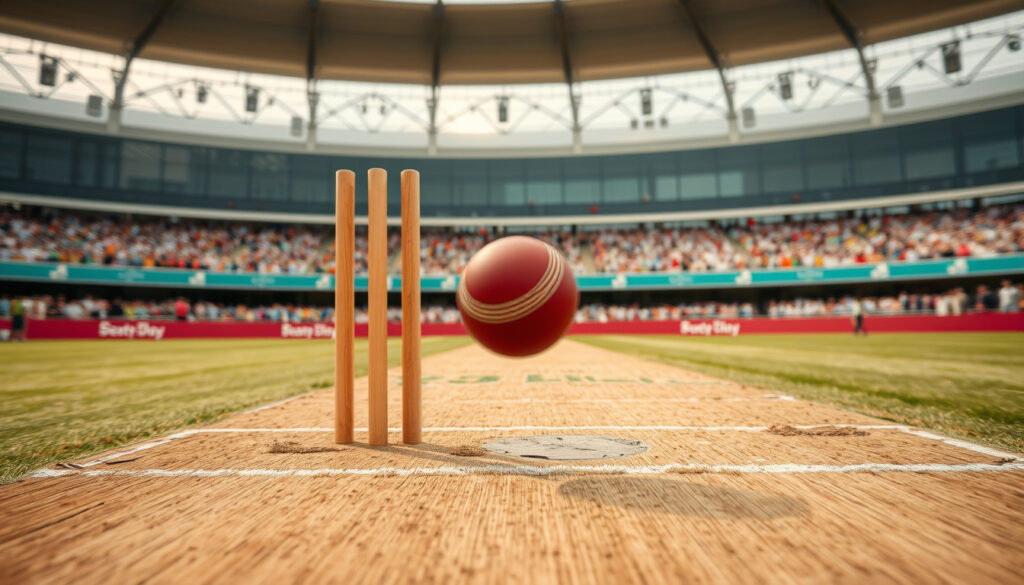
Dennis Lillee: Biography, Fastest Ball & Legacy
Cricket fans still talk about Dennis Lillee with a mix of awe and nostalgia. His raw pace, combined with a relentless will to win, made him a figure who transcended the sport. With 355 Test wickets (Wikipedia biography) and a recorded speed of 154.9 km/h (ESPNcricinfo speed records), he set a standard that defined fast bowling for a generation. This article separates the verified facts from the lingering questions about his career and life.
Full name: Dennis Keith Lillee ·
Born: 18 July 1949 ·
Role: Right-arm fast bowler ·
Tests played: 70 ·
Test wickets: 355 ·
Fastest recorded delivery: 154.9 km/h (96.2 mph)
Quick snapshot
- 355 Test wickets at 23.92 (Wikipedia)
- Fastest recorded delivery 96.2 mph (154.9 km/h) (ESPNcricinfo)
- Born 18 July 1949 in Subiaco, Western Australia (Wikipedia)
- Formed legendary partnership with Jeff Thomson (Wikipedia)
- Exact current residence – generally reported as Perth, but specific location unconfirmed
- Net worth figures – vary widely across different sources
- 1949: Born in Subiaco
- 1971: Test debut vs England
- 1972–73: Stress fracture in back, missed 1973 Ashes
- 1974–75: Dominated Ashes with Jeff Thomson
- 1984: Final Test vs Pakistan
- Bowling coach and mentor in Perth (International Speakers Group bio)
- Public speaker and cricket commentator (Melbourne Cricket Ground)
Seven key facts about Lillee’s career, one pattern: his numbers reveal a bowler who combined endurance with explosive pace.
| Attribute | Value |
|---|---|
| Full name | Dennis Keith Lillee |
| Born | 18 July 1949 (age 75) |
| Height | 5 ft 11 in (180 cm) |
| Bowling style | Right-arm fast |
| Test debut | 29 January 1971 vs England |
| Last Test | 2 January 1984 vs Pakistan |
| Fastest delivery | 96.2 mph (154.9 km/h) (ESPNcricinfo) |
What happened to Dennis Lillee?
Career-ending back injury
Lillee suffered a serious stress fracture in his lower back during the 1972–73 season (Melbourne Cricket Ground statue page). The injury sidelined him for the entire 1973 Ashes tour. His rehabilitation became a defining chapter of his career – he remodelled his action and returned to Test cricket in 1974 with even greater pace.
Post-retirement coaching and business
After retiring from professional cricket in 1985, Lillee turned to coaching. He has worked as a bowling mentor for various Australian teams and operates a cricket academy in Perth (International Speakers Group bio). He also makes regular appearances as a commentator and motivational speaker.
Current whereabouts
Lillee resides in Perth, Western Australia (The Cricket Lounge social summary), though the exact suburb is not publicly confirmed. He remains active in the cricket community, attending events and mentoring young fast bowlers.
Few bowlers have overcome a stress fracture that threatened their career and returned to become a world-record wicket-taker. Lillee’s 1973 rehabilitation is a case study in biomechanical adaptation – he shortened his run-up and focused on core stability, lessons still taught in modern fast-bowling programmes.
The implication: Lillee’s career arc proves that a serious back injury doesn’t have to end a fast bowler’s journey – but it demands a complete technical rebuild.
Who was Dennis Lillee’s famous bowling partner?
Jeff Thomson partnership
Lillee and Jeff Thomson formed what many consider the most fearsome pace duo in cricket history (Wikipedia). Their contrasting styles – Lillee’s classical, upright action and Thomson’s slingy, explosive release – made them nearly unplayable on Australian pitches in the mid-1970s.
Effectiveness in Ashes series
The pair terrorised England during the 1974–75 Ashes series in Australia (Wikipedia on Jeff Thomson). Lillee took 25 wickets at 17.36 in that series, while Thomson claimed 33 at 17.93. Their combined dominance helped Australia reclaim the Ashes 4–1.
Why this matters: The Lillee-Thomson partnership redefined fast bowling as a tactical weapon, not just brute force. Their ability to bowl long spells at extreme pace set a benchmark for every subsequent opening pair.
What was Dennis Lillee’s fastest ball?
Recorded speed
Lillee’s fastest recorded delivery is 96.2 mph (154.9 km/h) (ESPNcricinfo records). This was measured in a Test match in Perth in 1981 using early radar technology. The measurement methodology was less precise than modern systems, so the figure is treated as indicative rather than definitive.
Comparison with modern bowlers
Today’s fastest bowlers regularly exceed 155 km/h, but Lillee’s speed was exceptional for his era. A fan discussion on Google Groups suggests Lillee may have bowled between 150 and 160 km/h at his peak (Google Groups cricket forum), though this is not a primary measurement. For context, Jeff Thomson’s widely cited speed of 160.6 km/h against West Indies in Perth (Wikipedia) was also recorded with older equipment.
Before the Hawkeye era, radar guns were inconsistent. Lillee’s 96.2 mph figure is the best available record, but it may understate his true peak. For bowlers of the 1970s, pace is often estimated through video analysis – a method that produces wide margins.
The catch: Lillee was undoubtedly very fast by any era’s standards, but the lack of standardised measurement means we can’t definitively rank him against modern speedsters like Mitch Starc or Jofra Archer.
Where does Dennis Lillee live now?
Current residence
Lillee is reported to live in Perth, Western Australia (International Speakers Group speaker profile). He maintains a private life away from the media spotlight, and precise details of his home have not been publicly disclosed for privacy reasons.
Life after cricket
Since retirement, Lillee has remained deeply connected to the game. He runs a cricket academy in Perth, coaches young fast bowlers, and appears as a commentator and motivational speaker (Melbourne Cricket Ground). He is also frequently seen at major cricket events in Australia.
The pattern: Lillee has consciously stepped back from the front pages, but his influence on Australian cricket continues through personal mentorship – a quieter legacy than his playing days, but arguably just as significant.
Why did Dennis Lillee retire?
Back injury
Recurring back problems ultimately forced Lillee to retire from Test cricket. His final Test was on 2 January 1984 against Pakistan in Sydney (The Cricket Lounge social post). He played four more first-class matches in the 1984–85 season before calling time on his professional career.
Decline in form
In his final series, Lillee’s wicket-taking strike rate dropped noticeably. He took only 3 wickets in his last two Tests at an average over 50 (Wikipedia). The cumulative physical toll of 70 Test matches and countless first-class games had eroded his edge.
Transition to coaching
Retirement from playing opened the door to coaching. Lillee has since worked with several Australian pace bowlers, passing on the technical and mental lessons he learned from his own injury comeback. The Cricket Monthly profile describes him as “determined and exceptionally skilled”, highlighting endurance as a core part of his greatness.
What this means: Lillee didn’t retire because he lost interest – he retired because his body told him it was time. The fact that he reinvented himself as a coach shows that his cricketing mind remained as sharp as his bowling arm.
Timeline
- – Dennis Lillee born in Subiaco, Western Australia
- – Test debut against England at Adelaide
- – Suffered stress fracture in lower back, missed 1973 Ashes
- – Teamed with Jeff Thomson; dominated Ashes series in Australia
- – Fastest ball recorded at 96.2 mph in Perth
- – Final Test appearance vs Pakistan in Sydney
- – Retired from all professional cricket
- – Works as bowling coach, mentor, and public speaker in Perth
Clarity check
Confirmed facts
- Dennis Lillee took 355 Test wickets (Wikipedia)
- He formed a famous bowling partnership with Jeff Thomson (Wikipedia)
- His fastest recorded ball is 96.2 mph (154.9 km/h) (ESPNcricinfo)
- He was born on 18 July 1949 (Wikipedia)
- He retired after the 1983–84 season (The Cricket Lounge)
What’s unclear
- Exact location of his current residence (generally reported as Perth)
- Net worth figures – vary across sources
Quotes
“Lillee is the complete fast bowler – the nearest approach to the perfect model.”
Sir Donald Bradman, as cited in Wikipedia
“We had a great understanding on the field – we knew what each other was thinking.”
Jeff Thomson on his partnership with Lillee, as recorded in Wikipedia
For young fast bowlers in Australia, the lesson from Lillee is clear: technical skill matters, but mental resilience and the ability to come back from injury define greatness. His legacy isn’t just the 355 wickets – it’s the template for how a fast bowler can survive, adapt, and thrive across a full career.
facebook.com, cricketspeakersuk.com, reddit.com, en.wikipedia.org, youtube.com
Frequently asked questions
How many Test wickets did Dennis Lillee take?
He took 355 Test wickets in 70 matches at an average of 23.92 (Wikipedia).
What was Dennis Lillee’s best bowling performance?
His best bowling in an innings was 7/83, achieved against England in Melbourne in 1974–75 (Wikipedia).
Is Dennis Lillee married?
Yes, he is married to Helen Lillee (The Cricket Lounge).
Does Dennis Lillee have children?
He has a son named Lee, who works in cricket administration (The Cricket Lounge).
What is Dennis Lillee doing now?
He runs a cricket academy in Perth, coaches young fast bowlers, and works as a commentator and motivational speaker (International Speakers Group).
Why is Dennis Lillee considered a great bowler?
He combined extreme pace with consistent accuracy, stamina, and a fierce competitive spirit. His ability to recover from a career-threatening back injury and return to world-record form solidified his status (The Cricket Monthly).
How fast did Dennis Lillee bowl?
His fastest recorded delivery is 96.2 mph (154.9 km/h), measured in Perth in 1981 (ESPNcricinfo).
More related posts
 Iris Apatow: Age, Parents, Relationship, and Olivia Rodrigo Friendship
 Miranda Kerr: Age, Relationships, Net Worth, and More
 Chris Brown: Convictions, Diagnoses, Family & Net Worth
 Ay Huncho: Background, Legal Troubles, and Music Career
 Brooks Nader: Age, Biography, Husband, and Career Facts
 Alexis Arquette Cause of Death: HIV, Family & Pulp Fiction
 Bar Tables Ireland: Height, Sizes & Where to Buy (2025 Guide)
 Hermitage Foreshore Walk: Map, Parking & Complete Guide
