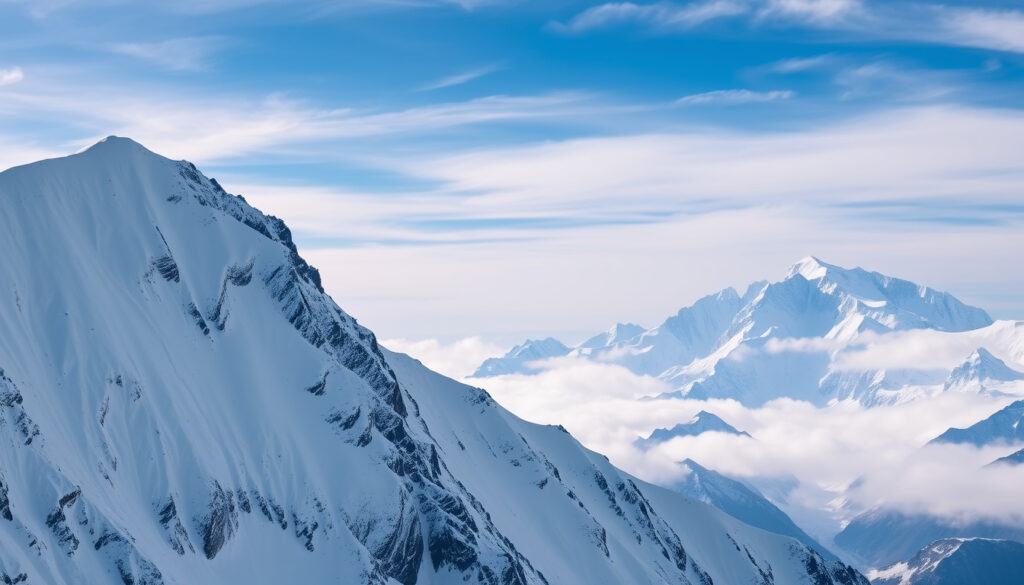
Mt Cook vs Everest: Why It’s One of the Hardest Climbs
Most people know Mount Cook as New Zealand’s tallest peak, but height alone doesn’t tell the story. Ask any climber who’s stood at its base and they’ll tell you this mountain demands respect in ways that altitude measurements can’t capture.
Height: 3,724 m (12,218 ft) ·
Location: South Island, New Zealand ·
First ascent: 1894 by Tom Fyfe, George Graham, Jack Clarke ·
Recorded deaths: More than 80
Quick snapshot
- Height: 3,724 m (confirmed via New Zealand survey) (ClimbNZ climbing database)
- First ascent: 1894 by Tom Fyfe, George Graham, Jack Clarke (Wikipedia encyclopedia)
- Located in Aoraki/Mount Cook National Park, South Island (Department of Conservation agency)
- Exact total death count varies by source — estimates range from 80 to over 100
- Whether Mount Cook is “harder” than Everest depends on the criteria (technical grade vs altitude) — no objective ranking exists
- Annual climb attempt numbers are not officially published by DOC or the Alpine Club
- 1894: First ascent by Fyfe, Graham, Clarke (Wikipedia encyclopedia)
- 1914: First recorded fatality on the mountain (Wikipedia encyclopedia)
- 1991: Major rockfall reduced height by ~10 m (ClimbNZ climbing database)
- Climbing seasons continue to shift due to glacial retreat on key routes like Linda Glacier (Peak Ex guiding company)
- Increased focus on managed access and safety protocols by DOC and Ngāi Tahu (Peak Ex guiding company)
Six key facts, one pattern: Mount Cook is less about sheer height and more about the uncompromising technical challenge it presents to climbers.
| Attribute | Value |
|---|---|
| Height | 3,724 m (12,218 ft) |
| Location | Aoraki/Mount Cook National Park, South Island, New Zealand |
| First Ascent | 1894 by Tom Fyfe, George Graham, Jack Clarke |
| Total Deaths | Over 80 (as of 2024) |
| Peaks over 3,000m in park | 19 |
| Closest town | Mount Cook Village |
Is Mt Cook harder than Everest?
This question sparks endless debate in climbing circles, and the answer depends entirely on how you define “hard.” Mount Everest reaches 8,848.86 m and demands extreme altitude adaptation, but its standard South Col route is technically straightforward compared to Mount Cook’s steep, icy, and rock-fall-prone faces. As Peak Ex guiding company describes it, a guided climb of Aoraki/Mount Cook is “one of the most committing alpine climbs in Australasia.” The Linda Glacier route has narrowed its viable season in recent decades because of glacial retreat and changing snow conditions. So while Everest kills through altitude and exhaustion, Mount Cook kills through objective hazards: falling rock, collapsing seracs, and sudden weather turns.
What are the top 5 hardest mountains to climb?
- K2 (8,611 m) – Higher fatality rate than Everest. Technical ice and rock at extreme altitude.
- Annapurna I (8,091 m) – Deadliest 8,000er by rate. Avalanche-prone slopes.
- Mount Cook (3,724 m) – Not high but technically severe. Ranks among the most committing climbs outside the Himalaya.
- Matterhorn (4,478 m) – Classic alpine climb with loose rock and high exposure.
- Eiger (3,967 m) – The Nordwand (North Face) is legendary for its objective dangers and changing conditions.
The pattern: Pure altitude alone doesn’t define difficulty — technical grade, objective hazard, and weather volatility matter just as much.
What is the deadliest mountain in NZ?
Mount Cook holds that unfortunate title with more than 80 recorded fatalities (ClimbNZ climbing database). The causes reflect the mountain’s technical nature: climbers fall, avalanches sweep faces, and rockfall has killed parties without warning. No other New Zealand peak comes close in terms of total deaths.
Mount Cook at 3,724 m is less than half the height of Everest, yet experienced mountaineers often describe it as harder because you cannot rely on bottled oxygen or fixed lines. The mountain demands self-sufficiency in every phase of the climb.
The implication: For climbers seeking a pure technical test rather than a high-altitude endurance event, Mount Cook arguably offers a greater challenge per vertical meter than any 8,000-meter peak.
Why is Mt Cook so famous?
Mount Cook sits at the intersection of natural grandeur, cultural significance, and mountaineering lore. It’s New Zealand’s highest peak at 3,724 m (ClimbNZ climbing database), but fame isn’t just about height. To Māori iwi Ngāi Tahu, the mountain is known as Aoraki — an ancestor turned to stone, a foundational figure in their creation story. The Department of Conservation agency manages the park in partnership with Ngāi Tahu, reflecting deep cultural stewardship. In 1990, the park was inscribed as part of the Te Wāhipounamu World Heritage Site, placing it alongside the world’s most treasured natural landscapes. Its glaciers — including the Tasman, Hooker, and Mueller — draw photographers and hikers year-round.
Sir Edmund Hillary trained on Mount Cook before his Everest ascent, and the mountain remains a rite of passage for New Zealand climbers. 100% Pure New Zealand tourism authority promotes the park as a year-round destination, with the ideal hiking season from November to March.
How many were killed on Mt Cook?
More than 80 recorded fatalities have been documented on Mount Cook according to ClimbNZ climbing database, though exact totals vary by source because not every incident appears in official records. The first recorded fatal accident occurred in 1914, and deaths have continued across decades. Causes break down into a few categories: falls during descent account for the largest share, followed by avalanches and rockfall. The 1991 rockfall that sheared approximately 10 meters off the summit is a reminder that the mountain itself is geologically active.
Department of Conservation agency has improved safety information and route management, but the mountain’s objective hazards remain. Compared to other peaks, Mount Cook’s death toll is modest in absolute numbers — Everest has claimed over 300 lives — but per climber, its fatality rate is sobering.
The mountain that looks straightforward from the Hooker Valley track hides objective dangers that have killed guided and unguided climbers alike. No amount of fitness replaces the need for technical rope skills and glacial hazard awareness.
The implication: For anyone considering a climb, the decision isn’t about fear — it’s about respecting that Mount Cook’s death toll reflects a pattern of under-preparation, not bad luck.
What is the closest town to Mount Cook New Zealand?
Mount Cook Village is the closest settlement, sitting right inside the national park boundary. It’s tiny — a cluster of accommodations, a visitor center, and the Hermitage Hotel — but it’s the base camp for virtually every visitor. The Department of Conservation agency runs the visitor centre there with free entrance information services, open daily from 8:30 am to 5 pm in summer (October to April) and 8:30 am to 4:30 pm in winter (May to September). The nearest sizeable towns are Twizel (60 km south) and Lake Tekapo (100 km northeast), both offering wider food and accommodation options. Access is via State Highway 80, which branches off State Highway 8 near Twizel — a scenic drive that follows Lake Pukaki’s turquoise shore.
For climbers, Mount Cook Village is the practical launch point: guided expeditions depart from here, gear shuttles run to the Tasman Glacier, and the weather forecast from the visitor center is the last word before any summit attempt.
Can beginners climb Mount Cook?
The short answer: no, not without serious preparation. Mount Cook is a technical alpine climb requiring rope work, crampon skills, crevasses rescue knowledge, and glacier travel experience. Peak Ex guiding company lists the climbing season as November to March, with the most reliable conditions from November through December and a secondary window in late February to March. They emphasize the climb as “one of the most committing alpine climbs in Australasia.” Beginners can hire guides, but even guided parties need baseline fitness and acclimatization to glacier terrain.
That said, the park offers excellent alternatives: the Hooker Valley Track (3 hours return, flat, stunning views of the mountain), the Tasman Glacier View track (short, with icebergs), and the Sealy Tarns track (moderate, with panoramic views). 100% Pure New Zealand tourism authority recommends November to March for hiking, with warmer and more stable weather, and notes that winter tracks may be inaccessible due to snow and ice.
Beginners should treat Mount Cook’s summit the same way they would treat Everest — as an objective that requires years of progressive training, not a bucket-list checkmark after a weekend course. The valley walks are world-class and risk-free by comparison.
The pattern: Mount Cook attracts both extremes — absolute beginners who underestimate it, and elite climbers who respect it. The sweet spot for aspiring summiteers is to build skill on easier NZ peaks first (Tasman, Malte Brun) before attempting Aoraki itself.
Summary
Mount Cook is not a scaled-down version of Everest — it’s a different category of challenge entirely, where technical difficulty and objective hazard replace altitude as the primary test. For New Zealand climbers, the implication is clear: train on the mountain’s smaller neighbors, understand that the Linda Glacier is shrinking, and treat every ascent with the respect that 80-plus fatalities demand. For international visitors, the choice is between photographing it from the Hooker Valley track — which delivers world-class scenery with zero risk — or committing to a years-long progression that ends, for a tiny fraction, on the summit. The mountain doesn’t care which you choose. But you should.
Related reading: Mt Cook NZ: Aoraki Travel Guide, Height, Difficulty vs Everest
annapurnatrekking.com, national-parks.org, aussiebrief.org, en.wikipedia.org
Frequently asked questions
What is the hardest mountain to climb in New Zealand?
Mount Cook is widely considered the hardest technical climb in New Zealand due to its steep ice, rockfall hazard, and rapidly changing weather. Other contenders include Mount Aspiring and Mount Tasman.
How many people climb Mount Cook each year?
Exact numbers aren’t officially published by DOC or the Alpine Club. Estimates suggest several hundred climbers attempt the summit annually, with guided parties making up a significant portion.
Do I need a permit to climb Mount Cook?
No permit is required for climbing in Aoraki/Mount Cook National Park, but all climbers must register their intentions with the Department of Conservation visitor centre and carry appropriate safety equipment.
What is the success rate for climbing Mount Cook?
Unlike commercialized mountains, Mount Cook doesn’t publish official success rates. Guiding companies estimate 50-70% on good weather windows, but many parties turn back due to conditions or route conditions.
Is Mount Cook part of the Seven Summits?
No. The Seven Summits list the highest peak on each continent. Mount Cook is not the highest peak in Oceania (that’s Puncak Jaya or Kosciuszko, depending on the list).
How long does it take to acclimatize for Mount Cook?
Because Mount Cook’s summit sits at 3,724 m, altitude is less of a factor than in the Himalaya. Most guided climbs allow 1-2 days of hiking and glacier training for acclimatization before the summit push.
What gear is required to climb Mount Cook?
Essential gear includes mountaineering boots, crampons, ice axe, harness, helmet, rope, crevasse rescue kit, and appropriate clothing for sub-zero temperatures. Guide companies typically provide technical gear for their clients.
More related posts
 Elizabeth Hurley: Age, Net Worth, Relationships, Diet & More
 John Pesutto’s Defamation Loss and Leadership Spill
 VUL ASX Share Price: Live Data, Forecast & Analysis
 The Wild Robot: LGBTQ Themes, Autism Rep & Parent Guide
 Virgil van Dijk: Contract, Family, Friendships, Health & Future
 When Do Babies Start Talking – Age-by-Age Milestones Guide
 Japan Earthquakes Tsunami Warning – Noto Peninsula Facts 2024
 AVIF to JPG: Free Online Converters & Step-by-Step Guide
