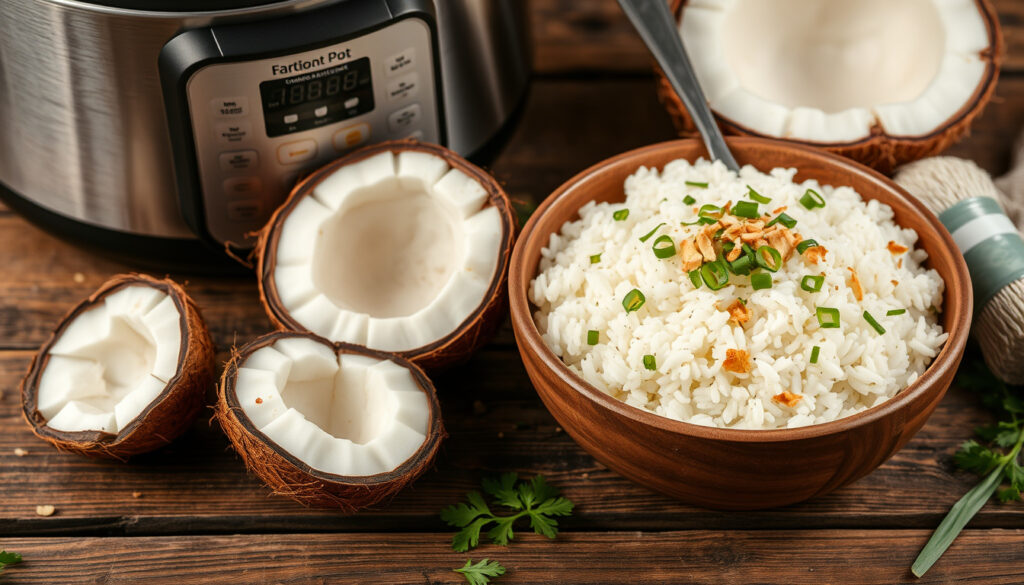
Coconut Rice Recipe: Easy Fluffy Stovetop Rice Cooker
If your coconut rice has ever turned out gluey, gummy, or just plain wrong, you’re not alone — and the fix is simpler than you think. Most recipes fail at the liquid ratio, the rice-rinsing step, or the resting phase, leaving you with something closer to risotto than the light, fluffy side dish you wanted. Below, you’ll find science-backed techniques for getting coconut rice right every time, whether you use a rice cooker, the stovetop, or even the oven.
Prep Time: 5 minutes · Cook Time: 20 minutes · Servings: 4 · Key Ingredient: Coconut milk · Rice Type: Jasmine or basmati
Quick snapshot
- Coconut milk is the primary liquid (Love and Lemons recipe blog)
- Calorie counts vary by ingredient brands and quantities used
- Recipe developers continue refining coconut rice methods
- Stovetop, rice cooker, and baked preparation methods covered
| Field | Value |
|---|---|
| Primary Liquid | Coconut milk |
| Best Rice | Jasmine |
| Common Add-in | Salt and sugar |
| Texture Goal | Fluffy |
What are the ingredients for coconut rice?
The foundation of any coconut rice recipe is straightforward: you need rice, coconut milk, and a liquid ratio that keeps the grains separate. Jasmine rice is the preferred variety because its fluffy texture and subtle aromatic quality pair beautifully with coconut (Love and Lemons recipe blog). Full-fat canned coconut milk delivers the richest flavor — cartoned versions are often sweetened or watered down, which dilutes the taste (Love and Lemons recipe blog).
Basic ingredients
- 1 cup uncooked jasmine rice (rinsed 2–3 times until water runs clear)
- 14-ounce can full-fat coconut milk
- 1–1.25 cups water
- 1 teaspoon salt
- 1–2 teaspoons sugar (balances the coconut flavor)
Variations by region
Caribbean coconut rice adds butter, ginger, garlic, and a cinnamon stick, sautéed before the rice goes in (YouTube Caribbean cooking video). Indian coconut milk rice is a traditional pilaf that includes soaking the rice for 20 minutes and can be made in an instant pot (Indian Healthy Recipes blog). Southeast Asian coconut rice sticks closer to the classic: jasmine rice, coconut milk, and a touch of coconut oil (Cooking Therapy blog).
Salt and sugar aren’t optional flavor tweaks — they’re functional. Sugar rounds out the coconut’s natural sweetness, while salt heightens all other flavors. Skip them, and the rice tastes flat.
The pattern across regional versions shows that coconut rice adapts to local flavor preferences while maintaining the core technique of rice cooked in coconut milk.
What are common mistakes when making coconut rice?
Two mistakes account for most coconut rice failures: overstirring and wrong liquid ratios. Stirring rice while it cooks breaks the grains apart, releasing starch and creating that gluey texture everyone hates. The liquid ratio is equally critical — too much liquid and you’ll get mushy rice; too little and the grains stay hard.
Overstirring rice
Once you’ve added the rice to the liquid, don’t stir. Ever. The starch released from stirring is what turns coconut rice into a sticky mass. The solution is simple: combine everything, bring to a boil, cover, and walk away (Love and Lemons recipe blog).
Wrong rice-to-liquid ratio
For stovetop recipes using 2 cups of jasmine rice, the standard is 13.5 ounces of coconut milk with enough water to reach the correct total volume (The Woks of Life food blog). For rice cookers, the ratio shifts slightly — 2 cups jasmine rice, 1 can (13.5–14 oz) full-fat coconut milk, and 1–1.25 cups water works reliably (The Nessy Kitchen recipe blog).
Rinsing rice 2–3 times until the water runs clear removes excess surface starch, which is the primary culprit behind sticky, clumpy results. This single step is what separates fluffy coconut rice from gluey coconut rice (The Nessy Kitchen recipe blog).
The implication is that most home cooks skip the rinsing step without realizing it’s the difference between restaurant-quality fluff and kitchen frustration.
How to make coconut rice easy?
The easiest method depends on your kitchen setup. A rice cooker requires minimal active attention — add ingredients, press a button, and let it work (Simply Scratch cooking blog). The stovetop method gives you more control but demands occasional monitoring.
Stovetop method
- Rinse jasmine rice 2–3 times until water runs clear
- Combine rice, coconut milk, water, salt, and sugar in a pot
- Bring to a boil over medium-high heat
- Reduce to low, cover, and simmer for 15 minutes
- Remove from heat and rest covered for 10 minutes
- Fluff with a fork and serve
Total time runs about 50 minutes including prep (The Woks of Life food blog).
Rice cooker method
Rinse the jasmine rice until water runs clear, then add it to the rice cooker with coconut milk, water, and seasonings. Some cooks recommend heating the liquid first before adding rice for a fluffier result (Grilled Cheese Social food blog). Once the cooking cycle finishes, let the rice sit on the warm setting for 10–15 minutes to allow excess liquid to absorb and the texture to firm up (Grilled Cheese Social food blog). Then let it rest uncovered for 5–10 minutes before serving (A Fork’s Tale recipe blog).
“Coconut rice can easily be made in a rice cooker! Such an easy way to enjoy this Thai inspired side dish. It turns out perfectly every time.”
— The Nessy Kitchen (Recipe blog)
Rice cooker total time: approximately 45 minutes (10 min prep, 20 min cook, 15 min rest). Stovetop total time: approximately 50 minutes (25 min prep, 25 min cook). The rice cooker method is genuinely more hands-off.
What this means for busy weeknight cooks is that the rice cooker method eliminates the need to monitor heat levels or timing, reducing the cognitive load significantly.
Is coconut rice with coconut milk or cream?
Standard coconut rice uses coconut milk — not cream. Full-fat canned coconut milk provides the right balance of fat and liquid for proper rice hydration. Cream produces an excessively rich, dense result that’s closer to a coconut pudding than a side dish.
Coconut milk standard
The standard approach is full-fat canned coconut milk. Mahatma brand’s recipe uses 2 cups jasmine rice with 2 cups full-fat coconut milk and 1 cup water (Mahatma Rice brand website). This ratio yields rice that’s creamy but still has distinct, separated grains.
Cream for richer version
If you want an especially decadent result — think of it more as a coconut rice pudding — you can substitute heavy cream for some or all of the coconut milk. This works best when the rice will be served as a dessert or a base for something sweet.
“This coconut rice recipe is an easy, delicious side dish! Cooking rice in coconut milk makes it rich, fragrant, and full of coconut flavor.”
— Love and Lemons (Recipe blog)
The catch for those watching fat intake is that cream substantially increases caloric density without improving the coconut flavor beyond what good-quality coconut milk delivers.
How to make the most flavorful coconut rice?
Flavor in coconut rice comes from aromatics, proper seasoning balance, and technique choices that enhance — rather than mask — the coconut taste. The baking method, though less common, produces the fluffiest results of all.
Baking trick
Baking coconut rice in a covered Dutch oven or baking dish at 375°F (190°C) for 25–30 minutes yields exceptionally fluffy grains. The gentle, even heat distributes more uniformly than stovetop cooking, and the covered environment traps steam for even hydration.
Regional spices
Caribbean coconut rice leverages bold aromatics: butter, minced garlic, freshly grated ginger, and a cinnamon stick are sautéed before the rice goes in (YouTube cooking video). Indian coconut milk rice adds whole spices like bay leaves, cardamom, and cloves during the cooking process (Indian Healthy Recipes blog). Thai-style coconut rice keeps the flavor profile lighter, relying on coconut milk and lime for brightness.
“This coconut rice recipe is just as easy to make as plain white rice, and its sweet-savory coconut aroma makes it a perfect complement for Southeast Asian recipes.”
— The Woks of Life (Food blog)
The implication for flavor-focused cooks is that regional spice additions transform coconut rice from a plain side dish into a culturally authentic component of a larger meal.
Related reading: Tom Yum Soup Recipe · Chicken Schnitzel Recipe
Frequently asked questions
Is coconut rice healthy or unhealthy?
Coconut rice provides carbohydrates from jasmine rice and fat from coconut milk. The health profile depends on portion size and what you serve it with. Coconut milk contains saturated fat, but it also offers medium-chain triglycerides (MCTs), which some research links to energy metabolism benefits.
What rice is best for coconut rice?
Jasmine rice is the gold standard for coconut rice because its texture stays light and fluffy, and it has a subtle fragrance that complements coconut. Basmati rice works as a substitute if you prefer a firmer grain.
How to avoid gluey coconut rice?
Three steps prevent gluey texture: rinse the rice 2–3 times until water runs clear to remove excess starch, avoid stirring once cooking begins, and let the rice rest covered after cooking before fluffing.
Can you make coconut rice without coconut milk?
Yes, but the flavor profile changes significantly. Substituting with chicken broth, vegetable broth, or water produces a rice that tastes like regular rice with whatever seasonings you add — not coconut rice. If you want the coconut taste without coconut milk, try coconut extract or coconut-flavored broth.
What is the difference between Thai and Indian coconut rice?
Thai coconut rice is simpler, typically using just coconut milk, rice, and perhaps a touch of lime. Indian coconut milk rice is a spiced pilaf that includes bay leaves, cardamom, cloves, and often vegetables like carrots and green beans. The Indian version also typically soaks the rice before cooking.
Is coconut rice gluten-free?
Yes, coconut rice is naturally gluten-free when made with standard ingredients (jasmine rice, coconut milk, salt, sugar). Always check that your coconut milk brand doesn’t contain additives or flavorings derived from gluten sources.
How long does coconut rice last in fridge?
Properly stored coconut rice lasts 3–4 days in an airtight container in the refrigerator. Reheat in the microwave with a splash of water or coconut milk to restore moisture, or gently in a covered pan over low heat.
More related posts
 Peter Garrett: From Midnight Oil to Politics and Advocacy
 Jimmy Carr Tax Scandal: £3.3M Owed & Net Worth
 Most Expensive Labubu – Record Prices and Rarest Models
 Hall and Wilcox: Who They Are, Services, and Market Position
 Mike Myers: Health, Net Worth & Career Facts
 Brooks Nader: Age, Biography, Husband, and Career Facts
 Maggie Baugh: Age, Keith Urban Band Role, and Career Facts
