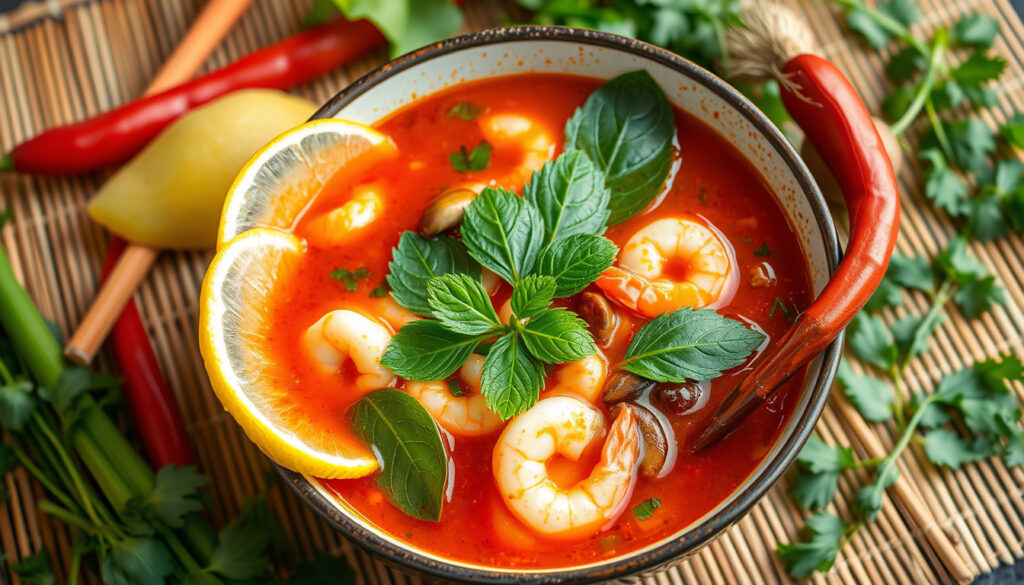
Tom Yum Soup – Authentic Recipe, Ingredients and History
Tom Yum Soup: The Ultimate Thai Hot and Sour Soup Guide
Tom yum soup stands as one of Thailand’s most celebrated culinary exports, a dish that captures the essence of Thai cuisine in a single bowl. This hot and sour soup, known locally as ต้มยำ, combines bold flavors—spicy, sour, salty, and subtly sweet—into a harmonious broth that has captivated palates across the globe. Whether called tom yum goong when prepared with shrimp or simply tom yum, this dish showcases the remarkable balance of flavors that defines Thai cooking traditions.
The soup’s distinctive character comes from a carefully assembled group of aromatic ingredients: lemongrass, galangal, kaffir lime leaves, chilies, fish sauce, and fresh lime juice. These components work together to create a broth that is simultaneously refreshing and intense, warming the body while awakening the senses. For home cooks seeking to explore Thai cuisine beyond restaurant menus, tom yum soup offers an accessible entry point that rewards attention to fresh ingredients and balanced seasoning.
Understanding tom yum means appreciating its cultural significance within Thai meal traditions. More than just a first course, this soup represents a philosophy of eating that prioritizes flavor contrast, aromatic complexity, and the interplay between heat and acidity. As Thai cuisine has spread worldwide, tom yum has remained a touchstone—a dish that defines what makes Thai food distinctly itself.
What Is Tom Yum Soup?
Tom yum soup originates from central Thailand, particularly in the region surrounding Bangkok. The name derives from two Thai words: “tom” meaning to boil and “yum” referring to a salad-like combination of sour, spicy, and salty flavors. The dish evolved from traditional Thai cooking practices that emphasized using local freshwater ingredients combined with aromatic herbs cultivated in the region.
The Signature Flavor Balance
What sets tom yum apart from other Thai soups is its uncompromising commitment to the balance of four fundamental tastes. The sourness comes from fresh lime juice, providing bright acidity that cuts through richer elements. Chili peppers deliver the heat, traditionally using bird’s eye chilies that pack significant punch even in small quantities. Fish sauce contributes the savory, salty umami foundation that anchors the broth. Finally, a touch of sugar or the natural sweetness of vegetables creates subtle balance against the aggressive sour and spicy notes.
The aromatics distinguish authentic tom yum from simplified versions. Lemongrass stalks, galangal rounds, and torn kaffir lime leaves infuse the broth with their oils during cooking, creating layers of fragrance that linger on the palate. These ingredients are typically removed before serving, as they remain too fibrous to eat comfortably, but their flavor contribution is essential to the authentic experience.
The version most familiar internationally is tom yum goong, featuring shrimp as the primary protein. However, variations throughout Thailand substitute chicken, pork, fish, or mushrooms, and the spice level can vary significantly by region—northern versions tend toward milder preparations, while southern styles often embrace extreme heat.
- Authentic broth requires time: Simmering aromatics for at least 10-15 minutes extracts maximum flavor before adding delicate ingredients.
- Head-on shrimp improve stock: Shells and heads contain valuable flavor compounds that enrich the base when simmered briefly.
- Adjust seasonings last: Fish sauce and lime juice should be added after cooking protein, as heat affects their perceived intensity.
- Fresh herbs outperform paste: While convenient, jarred pastes lack the bright, aromatic qualities of freshly prepared broth.
- Mushrooms provide body: Oyster or button mushrooms contribute texture and umami that balance the liquid elements.
- Creamy versions require chili paste: The “nam khon” variation adds evaporated milk and nam prik pao for a richer consistency.
- Kaffir lime leaves have a ceiling: More than 10 leaves per batch can become bitter; precision matters with this ingredient.
| Fact | Detail |
|---|---|
| Calories (per serving) | 150-250 |
| Protein | 15-20g from shrimp or alternatives |
| Spice Level | Medium to high (adjustable) |
| Cuisine | Thai |
| Typical Servings | 4 |
| Storage Life | 2-3 days refrigerated |
| Sodium Content | 500-1000mg per serving |
| Carbohydrates | Approximately 10g per serving |
Key Ingredients in Tom Yum Soup
The success of tom yum soup depends entirely on the quality and preparation of its ingredients. While the ingredient list may appear lengthy, each component serves a specific purpose in building the complex final flavor. Understanding these elements transforms cooking tom yum from following a recipe to making informed adjustments based on available ingredients and personal preference. Those curious about how Thai cuisine utilizes fermented ingredients may also appreciate exploring similar flavor-balancing techniques found in other culinary traditions.
Aromatic Components
The soul of tom yum lies in its aromatic trio: lemongrass, galangal, and kaffir lime leaves. Lemongrass stalks should be smashed or cut into 2-inch pieces to release their oils during cooking. Galangal, often confused with ginger, offers a more floral, peppery note; it is typically sliced into rounds or coins. Kaffir lime leaves, known as makrut leaves in their modern Thai name, provide an unmistakable citrusy aroma that defines Thai cooking. For optimal flavor extraction, tear the leaves rather than cutting them, as the jagged edges release more oils.
Thai chilies—specifically bird’s eye chilies—deliver the signature heat. Most recipes call for 2-10 chilies, smashed to release their oils and seeds into the broth. The quantity directly controls spice level, making personal adjustment straightforward. Some cooks prefer to add chilies gradually, tasting as they build the broth to find their preferred heat balance.
Protein and Vegetables
Traditional tom yum goong centers on medium to large shrimp, with head-on and shell-on varieties preferred for their flavor contribution. When time permits, cooking the shells briefly in oil before adding the liquid creates a homemade stock with significantly more depth than using plain water or prepared broth. The shrimp themselves should be added toward the end of cooking—typically 1-2 minutes in simmering broth is sufficient to reach opaque, pink perfection without toughening the texture.
Mushrooms provide body and absorbency that makes the broth more satisfying. Oyster mushrooms and button mushrooms both work well; quartered or torn into bite-sized pieces, they contribute their own mild umami while taking on the surrounding flavors. Tomatoes add acidity and sweetness, typically quartered and added early in cooking to soften slightly. Wedge-cut onions contribute sweetness when cooked in the broth, though some variations omit them entirely.
Seasonings and Finishers
Fish sauce serves as the primary seasoning, providing saltiness and depth that no substitute quite replicates. The range of 1-12 tablespoons across recipes reflects significant variation in sodium content among fish sauce brands. Fresh lime juice, always added after removing the pot from direct heat, supplies the bright sour note that balances everything else. A small amount of sugar—typically ½ to 2 teaspoons—rounds the sharp edges of the lime and fish sauce combination.
Galangal, lemongrass, and kaffir lime leaves are considered aromatics rather than food. They steep in the broth to release their flavors but are traditionally removed before serving. Attempting to eat them can result in an unpleasant fibrous texture, though some home cooks chop them very finely for those who enjoy their intensity.
How to Make Tom Yum Soup at Home
Creating authentic tom yum soup at home requires attention to timing and sequence more than advanced technique. The process unfolds in distinct phases: building the aromatic foundation, creating the broth base, cooking the proteins and vegetables, and finally adjusting the seasoning. Each stage builds upon the previous one, creating layers of flavor that distinguish restaurant-quality results from rushed approximations.
Step-by-Step Preparation
Begin by preparing the stock if using fresh shrimp with shells. Heat a tablespoon of oil in a large pot over medium-high heat. Add the shrimp heads and shells, breaking them slightly with a spoon to expose more surface area. Sauté for 2-3 minutes until they turn pink and begin to release their juices. Add 4-6 cups of water and bring to a gentle simmer for 10-20 minutes, then strain out the shells and heads. This shrimp stock forms a deeply flavorful base that elevates the entire dish.
Place the strained stock back over medium heat. Add the lemongrass stalks, galangal slices, and kaffir lime leaves. These aromatics should simmer together for 5-10 minutes, allowing their flavors to infuse the broth thoroughly. The slow extraction process matters—boiling too aggressively can release essential oils too quickly while insufficient heat fails to extract them adequately.
Add the mushrooms, tomatoes, and onions to the simmering broth. These vegetables need approximately 5 minutes to soften slightly and absorb the aromatic flavors. The mushrooms should appear slightly wilted but still retain their structure. Next, add the shrimp and cook only until they turn pink and curl, typically 1-2 minutes depending on their size. Overcooked shrimp becomes tough and rubbery, making timing essential at this stage.
Remove the pot from heat. Stir in the fish sauce, lime juice, and sugar, tasting as you adjust. The seasoning should taste bold and balanced—the sour, salty, and spicy elements should all be present without any single note dominating. The broth should be transparent or slightly cloudy with a reddish hue from the chilies. Garnish with fresh cilantro and sliced green onions before serving immediately.
Adding lime juice while the broth is still boiling can cause the citrus flavor to taste dull or muted. Always remove the pot from heat or turn off the burner before adding acidic ingredients, allowing the flavors to remain bright and true.
Tom Yum vs. Tom Kha: Key Differences
Understanding the distinction between tom yum and tom kha helps diners navigate Thai menus and home cooks select the right recipe for their preferences. While both soups are quintessentially Thai and share aromatic ingredients, their fundamental approaches to flavor differ dramatically.
Tom yum presents as a clear broth with a bold, assertive personality. Its heat comes from chilies, its sourness from lime juice, and its saltiness from fish sauce. The broth has body from simmered ingredients but remains relatively thin and clean-tasting. Every sip delivers immediate impact—the sour-spicy assault that the word “yum” implies.
Tom kha gai—the chicken version most commonly encountered—takes a softer approach. Coconut milk provides richness and body that coats the palate, muting the aggressive edges of chili and lime. The result is more savory than spicy, more rich than refreshing. Galangal plays a larger role in tom kha, and the mushrooms often include straw mushrooms that contribute their own subtle sweetness.
| Characteristic | Tom Yum | Tom Kha |
|---|---|---|
| Broth Appearance | Clear, slightly oily | Creamy, white |
| Primary Heat Source | Thai chilies | Mild or absent |
| Sour Element | Fresh lime juice | Minimal lime |
| Signature Texture | Light, brothy | Rich, velvety |
| Coconut Milk | No | Yes |
| Typical Protein | Shrimp, fish | Chicken |
For those seeking the clean, bright flavors associated with Thai cuisine, tom yum delivers more authentically. Tom kha suits preferences for creamy, milder soups reminiscent of coconut-based dishes from other Asian traditions. Neither soup is definitively better—they simply offer different experiences worthy of appreciation on their own terms.
Variations Like Vegan Tom Yum Soup
The essential flavor profile of tom yum—the interplay of sour, spicy, salty, and aromatic—translates successfully to plant-based preparations. Vegan adaptations maintain the core structure while substituting vegetable protein and alternative seasonings to achieve comparable depth.
Plant-Based Substitutions
The most challenging substitution involves replacing fish sauce, which provides the savory umami foundation of traditional tom yum. Soy sauce or shoyu offers saltiness but lacks the complex fermented depth. Mushroom seasoning or tamari can provide more umami character. Some cooks combine multiple alternatives—perhaps half soy sauce and half mushroom liquid—to approximate the desired flavor profile more closely.
Vegetable stock serves as the broth base, ideally prepared with roasted vegetables for deeper flavor. Tofu replaces shrimp as the protein, typically pressed and cubed to hold its shape in the simmering broth. A mix of mushrooms—shiitake, oyster, and button varieties—contributes meaty texture and inherent umami that helps bridge the gap between traditional and plant-based versions.
When preparing vegan tom yum, consider adding extra mushrooms and perhaps a touch of miso paste to compensate for the umami typically contributed by fish sauce and shrimp. The core aromatic trio—lemongrass, galangal, and kaffir lime leaves—remains unchanged, as these herbs define the soup’s character regardless of protein source.
Regional and Style Variations
Beyond vegan adaptations, Thai cooks throughout the country prepare tom yum according to local ingredients and preferences. The creamy “tom yum nam khon” variation adds evaporated milk and Thai chili paste (nam prik pao), creating a richer, more substantial soup that appeals to those who find the clear version too sharp. Northern Thai versions often substitute chicken for shrimp and reduce the chili quantity, reflecting regional preferences for milder food.
Isaan-style preparations, from Thailand’s northeast region, tend toward more herbaceous profiles with additional varieties of local greens and stronger kaffir lime presence. These variations demonstrate the flexibility inherent in Thai cooking traditions—recipes serve as starting points rather than rigid formulas.
Origin and History of Tom Yum Soup
The precise origins of tom yum soup remain difficult to trace with certainty. Culinary historians generally agree that the dish developed in central Thailand, where access to both fresh seafood from river and coastal sources and the aromatic herbs grown throughout the region created favorable conditions for its development. The area surrounding Bangkok and the central plains provided ingredients and cooking traditions that combined to form this now-iconic soup.
The name itself reveals the dish’s character. “Tom” simply means to boil or cook in liquid, a basic cooking technique. “Yum” refers to a category of Thai preparations characterized by the combination of sour, spicy, salty, and sometimes sweet flavors mixed together—like a salad of tastes. The term “tom yum” thus describes a boiled preparation of ingredients combined in the distinctive Thai flavor balance.
While no exact date marks tom yum’s emergence, evidence suggests its development predates the twentieth century, rooted in traditional Thai cooking practices that emphasized these flavor combinations. The dish likely evolved gradually as regional ingredients and cooking techniques intersected, rather than appearing fully formed at any particular moment.
Tom Yum Goes Global
The international spread of tom yum accelerated significantly during the 1980s and 1990s as Thai restaurants opened in major cities worldwide and more travelers experienced authentic Thai cuisine firsthand. The dish’s bold flavors proved immediately appealing to adventurous eaters, while its relatively simple preparation technique made it reproducible in kitchens far from Thailand.
Thai grocery stores and specialty shops now stock the necessary aromatics in many urban areas, allowing home cooks to attempt authentic preparations. Prepared tom yum pastes and soup bases have further democratized access, though these convenience products rarely match the quality of freshly made broth.
Nutritional Profile and Health Considerations
A single serving of traditional tom yum goong provides approximately 150-250 calories, with the variation depending on recipe specifics and portion size. The shrimp contribute substantial protein—roughly 15-20 grams per serving—making the soup relatively high in protein compared to its caloric content. This protein content supports muscle maintenance and satiety without the heavy fat content of cream-based soups.
The herbs and vegetables bring meaningful nutritional benefits. Lemongrass contains compounds with potential anti-inflammatory and digestive properties. Galangal offers similar benefits, traditional Thai medicine incorporating these roots for various health purposes. Kaffir lime leaves provide vitamins A and C, while chilies contribute capsaicin, linked to metabolism boost and pain relief in traditional usage.
Dietary Considerations
Traditional tom yum soup is naturally gluten-free and low in carbohydrates, making it suitable for many popular dietary approaches. However, the sodium content warrants attention—fish sauce contributes 500-1000 milligrams of sodium per serving, significant for those monitoring their salt intake. Reducing fish sauce quantity or selecting reduced-sodium varieties can help manage this concern.
For those avoiding seafood, vegan adaptations using vegetable stock and tofu maintain the core flavor profile while offering plant-based protein. Those with allergies to the aromatic components should note that lemongrass, galangal, and kaffir lime leaves may trigger reactions in sensitive individuals.
Tom Yum Soup Timeline
The development of tom yum soup reflects broader Thai culinary history, emerging from regional cooking traditions that valued the balance of fundamental flavors.
-
Origins in central Thai cooking traditions, combining local freshwater shrimp with aromatic herbs -
Popularization as street food throughout Bangkok and surrounding regions -
Spread via Thai diaspora communities to North America, Europe, and Australia -
International restaurant boom brings tom yum to global menus as Thai cuisine gains recognition -
Home cooking accessibility increases with online recipes, specialty ingredient availability, and cooking content
What We Know and What Remains Unclear
Documentation of Thai culinary history presents challenges that affect how completely we can trace any particular dish’s development. While we can establish certain facts about tom yum soup with confidence, other aspects remain subject to interpretation and ongoing research.
| Established Facts | Elements Remaining Unclear |
|---|---|
| Central Thai origin in Bangkok region | Precise historical timeline of development |
| Name derives from “tom” (boil) and “yum” (flavor combination) | Specific regional influences on original recipe |
| Uses lemongrass, galangal, kaffir lime as core aromatics | Whether early versions included all three |
| Predates 20th century in some form | First recorded recipe documentation |
| Traditional flavor balance: sour, spicy, salty | Evolution of specific ingredient proportions over time |
| Shrimp (goong) was early and common protein | When substitutions (chicken, tofu) became common |
The absence of comprehensive written records from early Thai culinary history creates gaps that culinary researchers continue to examine. Family recipes passed through generations may offer clues, as may regional variations developed independently of Bangkok-centered traditions.
Cultural Role and Meaning
Within Thai cuisine and dining customs, tom yum soup plays multiple roles that extend beyond its function as a first course. The soup often appears at the center of family meals, its steam and fragrance signaling that food is being prepared with care. The process of making tom yum—from preparing the aromatics to adjusting the final seasoning—demonstrates attention to detail valued in Thai cooking philosophy.
Thai meals traditionally emphasize balance across multiple dishes, with individual recipes providing distinct flavor profiles that complement each other. Tom yum’s bold, aggressive flavors create contrast against milder rice dishes and vegetable preparations. The soup’s heat also serves a practical purpose in Thailand’s tropical climate, inducing perspiration that some believe cools the body.
The dish has become so associated with Thai identity that its presence on a menu often signals Thai cuisine specifically, rather than broader Southeast Asian cooking. Visitors to Thailand frequently encounter tom yum as one of their first introductions to authentic local food, creating lasting impressions of Thai culinary culture.
Expert Perspectives and Sources
Tom yum represents the perfect balance of the four Thai tastes—sour, spicy, salty, and sweet—in a single bowl. When made properly, it demonstrates how Thai cuisine achieves complexity through ingredient combination rather than complicated technique.
— Traditional Thai culinary instruction
The information presented draws from established Thai cooking resources, recipe developers specializing in Thai cuisine, and culinary traditions documented in various food writing. Recipe developers like those at Eating Thai Food and Hot Thai Kitchen offer detailed preparation instructions based on cooking experience and Thai culinary training.
Additional recipe sources including Serious Eats, BBC Good Food, and Thai Cookbook TV provide alternative approaches suitable for different kitchen situations and ingredient availability.
Summary
Tom yum soup embodies the fundamental principles of Thai cooking: bold flavor balance, aromatic complexity, and the creative use of fresh ingredients. What began as a regional specialty in central Thailand has become one of the world’s most recognized Thai dishes, appreciated for its aggressive sour-spicy character and its demonstration of how simple techniques can produce extraordinary results.
Making authentic tom yum at home requires attention to fresh ingredients and proper timing rather than advanced skill. The core aromatics—lemongrass, galangal, and kaffir lime leaves—define the soup’s character regardless of protein choice or regional variation. Whether prepared traditionally with shrimp or adapted for plant-based diets, tom yum remains accessible to home cooks willing to seek out quality ingredients and follow preparation sequences that honor the dish’s origins.
For those interested in exploring Thai cuisine further, understanding the distinction between tom yum and similar soups and their place within broader culinary traditions provides valuable context for appreciating this remarkable dish.
Frequently Asked Questions
How many calories are in tom yum soup?
A typical serving contains 150-250 calories, varying based on recipe and portion size. Non-creamy versions with shrimp typically fall toward the lower end of this range.
Is tom yum soup healthy?
Tom yum can be a healthy choice, offering high protein from shrimp, antioxidants from herbs, and vitamins from vegetables. However, the sodium content from fish sauce can be significant for those monitoring salt intake.
What gives tom yum its sour flavor?
Fresh lime juice provides the signature sour note. The quantity can be adjusted to taste, with more lime juice increasing the sour intensity.
Can I make tom yum without fish sauce?
Yes, soy sauce, tamari, or mushroom seasoning can substitute for fish sauce. The flavor profile will differ, but acceptable results are achievable for those avoiding seafood-based products.
What’s the difference between tom yum goong and regular tom yum?
“Tom yum goong” specifically indicates the shrimp version, with “goong” being the Thai word for shrimp. Plain “tom yum” may contain other proteins or no protein at all.
How long does tom yum soup last in the refrigerator?
Properly stored in an airtight container, tom yum soup maintains quality for 2-3 days. The shrimp and vegetables may soften further during storage.
Is tom yum soup spicy?
Traditional tom yum is spicy due to bird’s eye chilies, but the heat level is adjustable. Removing seeds and reducing chilies creates a milder version without losing the core flavor profile.
Where does tom yum originate?
Tom yum soup originated in central Thailand, particularly the Bangkok region, where it developed as part of traditional Thai cooking practices using local freshwater ingredients and aromatic herbs.
More related posts
 Jimmy Carr Tax Scandal: £3.3M Owed & Net Worth
 Alex Fine: Cassie Ventura’s Husband, Actor, and Trainer
 Jenna Dewan Biography, Kids, Divorce, and New Partner
 St Vincent’s Private Hospital: Specialties, Rooms, Access & FAQs
 Travis Head: Biography, Stats, IPL Future & Net Worth
 Joe Wilkinson Biography: Career, Podcast, and Personal Life
 Prince William: Heartbreaking News, DNA Test Rumors & Wealth
 Adam Treloar: Injury, Retirement, Partner & Salary Update
