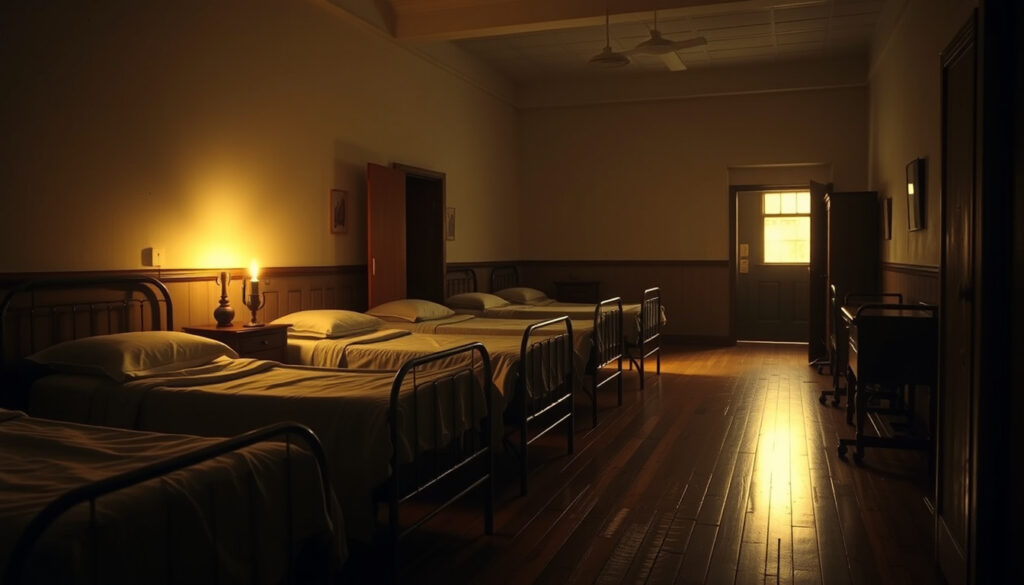
Florence Nightingale: The Lady with the Lamp, Nursing Founder
Few historical figures are as instantly recognizable as Florence Nightingale, yet the woman behind the lamp was far more than a comforting presence in a war hospital. She was a fierce data analyst who reshaped healthcare with statistics, a relentless reformer who fought bureaucracy from her sickbed, and a woman who rejected a conventional life to change the world. This article separates the myth from the meticulously recorded facts, tracing her journey from a rebellious young woman to the founder of modern nursing.
Born: 12 May 1820, Florence, Italy ·
Died: 13 August 1910, London, England ·
Crimean War service: 1854–1856 ·
Mortality rate reduction at Scutari: from 42% to 2% ·
Founded first secular nursing school: 1860 at St. Thomas’ Hospital ·
Published work: Notes on Nursing (1859)
Quick snapshot
- Founder of modern nursing (Britannica, authoritative encyclopedia)
- Reduced mortality at Scutari through sanitation reforms (NIH/PMC, academic medical research)
- Pioneering statistician who used polar area diagrams (BBC Teach, educational broadcaster)
- The exact nature of her post-Crimea illness (brucellosis, chronic fatigue, or other conditions)
- Whether she had any confirmed romantic relationships
- How much of her disability was physical vs. psychosomatic
- Born 1820 → Crimean War 1854–1856 → founding of nursing school 1860 → death 1910 (Britannica)
- Continued scholarly re-evaluation of her statistical methods and influence on evidence-based medicine
Nightingale is remembered as a gentle caregiver, yet her most powerful legacy is as a data warrior: she used statistics to force governments to act — and won.
Seven facts, one pattern: Nightingale’s identity was never just one thing — nurse, statistician, reformer, writer — and each role reinforced the others.
| Label | Value |
|---|---|
| Full name | Florence Nightingale |
| Born | 12 May 1820, Florence, Italy |
| Died | 13 August 1910, London, England |
| Nationality | British |
| Occupation | Nurse, social reformer, statistician |
| Known for | Founder of modern nursing, ‘Lady with the Lamp’ |
| Notable work | Notes on Nursing (1859) |
What was Florence Nightingale most known for?
Founder of modern nursing
- Nightingale is celebrated as the founder of modern nursing (Britannica, authoritative encyclopedia).
- She founded the Nightingale School of Nursing at St Thomas’ Hospital in London in 1860 (Britannica).
- King’s College London describes the St Thomas’ school as the world’s first professional school of nursing (King’s College London, academic institution).
Data-driven reforms and statistics
- Nightingale used statistical analysis to prove that most army deaths were caused by infectious diseases, not battle wounds (NIH/PMC, academic medical research).
- She produced over 200 publications on hospital planning and organization (London School of Hygiene & Tropical Medicine, public health research institution).
- She pioneered the polar area diagram (rose diagram) to visually communicate mortality causes (BBC Teach, educational broadcaster).
Crimean War contributions
- Nightingale was sent to Scutari in 1854 with 38 nurses (Britannica).
- After the Sanitary Commission’s work, mortality at Scutari reportedly fell from about 40% to 2% (National Women’s History Museum, educational organization).
- The BBC reports that 16,000 of 18,000 deaths in the Crimean War context were from preventable disease, not battle wounds (BBC Teach).
What this means: Nightingale’s legacy isn’t just the lamp — it’s the statistical revolution she forced onto a reluctant medical establishment.
Why do we call her lady with the lamp?
Origin of the nickname
- The nickname was coined by soldiers who saw her making rounds at night carrying a lamp, symbolizing her compassion and dedication (Britannica, authoritative encyclopedia).
- Henry Wadsworth Longfellow immortalized the image in his 1857 poem: “A Lady with a Lamp shall stand in the great history of the land.”
Her nightly rounds in Scutari
- Nightingale personally checked on wounded soldiers every night, often walking miles through the wards (Britannica).
- This practice became the defining image of her wartime service and is still used to represent nursing compassion globally.
The implication: The lamp story is true — but it’s only half the picture. The other half is the reams of statistical data she compiled in the same hospital.
What illness did Florence Nightingale have?
Crimean fever (suspected brucellosis)
- Nightingale contracted a severe fever (likely brucellosis) during the Crimean War in 1856 (Britannica, authoritative encyclopedia).
- The illness left her with chronic pain and fatigue for the rest of her life.
Chronic illness and disability in later life
- After age 37, Nightingale was largely bedridden and often confined to her home (Britannica).
- Despite her disability, she continued writing, campaigning, and advising from her bed for over 50 years (London School of Hygiene & Tropical Medicine, public health research institution).
Speculations on mental health
- Some historians suggest she also had post-traumatic stress disorder or other conditions, but the historical record does not confirm a diagnosis (Britannica).
- The exact nature of her illness remains uncertain — brucellosis, chronic fatigue syndrome, and psychosomatic factors have all been proposed.
Nightingale’s disability didn’t stop her — it redirected her. From her sickbed, she produced over 200 reports and forced government reforms, proving that chronic illness and high-impact work are not mutually exclusive.
The catch: The “invalid” label is often used to diminish her later achievements, but the evidence shows she was arguably more influential after she got sick than before.
Did Florence Nightingale ever marry?
Why she never married
- Nightingale rejected multiple marriage proposals, including one from the poet and politician Richard Monckton Milnes (Britannica, authoritative encyclopedia).
- She believed marriage would hinder her calling to nursing and reform work.
Relationships and proposals
- There is no confirmed evidence of a romantic lover in her life (Britannica).
- She maintained deep friendships, including with the politician Sidney Herbert and the writer Harriet Martineau, but these were not romantic.
The trade-off: Nightingale chose work over family. For a Victorian woman of her class, that was a radical — and costly — decision.
What are 10 facts about Florence Nightingale?
Early life and education
- 1. She was named after the city of Florence, Italy, where she was born on 12 May 1820 (Britannica, authoritative encyclopedia).
- 2. She refused a conventional married life to pursue nursing against her family’s wishes (Britannica).
- 3. She trained at Kaiserswerth, Germany, in 1851 and later in Paris with the Sisters of Mercy (Britannica).
Nursing career
- 4. She served in the Crimean War from 1854 to 1856, reducing mortality at Scutari from about 42% to 2% after sanitation reforms (National Women’s History Museum, educational organization).
- 5. She was known as ‘The Lady with the Lamp’ for her nightly rounds (Britannica).
- 6. She founded the Nightingale Training School at St. Thomas’ Hospital in 1860, the world’s first professional nursing school (King’s College London, academic institution).
Legacy and honors
- 7. She was the first woman awarded the Order of Merit in 1907 (Britannica).
- 8. She wrote over 200 books, reports, and articles on health and hospital reform (London School of Hygiene & Tropical Medicine, public health research institution).
- 9. She was a pioneering statistician who used polar area diagrams to advocate for healthcare change (BBC Teach, educational broadcaster).
- 10. She died on 13 August 1910 in London at age 90 (Britannica).
Some mortality statistics vary across sources because contemporary records were incomplete. The pattern — dramatic reduction after sanitation reforms — is consistent; the exact numbers differ.
Timeline
- 12 May 1820: Born in Florence, Italy (Britannica)
- 1837: Experienced a calling to nursing (Britannica)
- 1851: Trained at Kaiserswerth, Germany (Britannica)
- 1853: Became superintendent of London’s Institution for the Care of Sick Gentlewomen (Britannica)
- 1854–1856: Served in the Crimean War at Scutari (Britannica)
- 1856: Returned to England; contracted Crimean fever (Britannica)
- 1859: Published Notes on Nursing (Britannica)
- 1860: Founded the Nightingale Training School at St. Thomas’ Hospital (Britannica)
- 1907: Awarded the Order of Merit (Britannica)
- 13 August 1910: Died in London (Britannica)
Confirmed facts vs. What’s unclear
Confirmed facts
- Florence Nightingale was the founder of modern nursing (Britannica, authoritative encyclopedia).
- She reduced mortality at Scutari through sanitation improvements (NIH/PMC, academic medical research).
- She was a pioneering statistician (BBC Teach, educational broadcaster).
- She suffered from a debilitating illness after the Crimean War (Britannica).
- She never married (Britannica).
What’s unclear
- The exact nature of her illness (brucellosis, chronic fatigue syndrome, or something else).
- Whether she had any romantic relationships or lovers.
- How much of her disability was physical vs. psychosomatic.
Quotes
“I attribute my success to that I never gave or took any excuse.”
— Florence Nightingale, in a letter
“A Lady with a Lamp shall stand in the great history of the land.”
— Henry Wadsworth Longfellow, in his 1857 poem
“A passionate statistician” who used data to change policy.
— Biographer Cecil Woodham-Smith
The consequence of Nightingale’s life is not that nursing became a respected profession — it’s that evidence-based medicine and data-driven public health became the standard. For anyone in healthcare today, the choice is clear: honor her legacy by checking the data, not just grabbing the lamp. For historians, the work is unfinished: we still need a definitive account of her illness and its impact on her reforms.
en.wikipedia.org, mathshistory.st-andrews.ac.uk, encyclopedia.com, pmc.ncbi.nlm.nih.gov, journals.lww.com, journals.sagepub.com
Her pioneering work in nursing and statistics is explored in depth in a piece on Florence Nightingales lasting legacy, which examines the complexities behind her iconic nickname.
Frequently Asked Questions
How did Florence Nightingale die?
She died peacefully in her sleep on 13 August 1910 in London, at age 90 (Britannica).
Where was Florence Nightingale born?
She was born on 12 May 1820 in Florence, Italy, and was named after the city (Britannica).
What is Florence Nightingale syndrome?
It is a colloquial term sometimes used to describe a condition where caregivers develop romantic feelings for patients, but it is not a medically recognized diagnosis and has no basis in Nightingale’s actual life.
What was Florence Nightingale’s education?
She trained at Kaiserswerth, Germany in 1851, and later in Paris with the Sisters of Mercy (Britannica).
How old was Florence Nightingale when she died?
She was 90 years old (Britannica).
What did Florence Nightingale write?
She wrote over 200 books, reports, and articles, most famously Notes on Nursing (1859) (London School of Hygiene & Tropical Medicine, public health research institution).
Did Florence Nightingale have a nurse training school?
Yes, she founded the Nightingale Training School at St. Thomas’ Hospital in London in 1860, widely considered the first professional nursing school (Britannica; King’s College London).
What honors did Florence Nightingale receive?
She was the first woman awarded the Order of Merit in 1907, among many other honors (Britannica).
More related posts
 Millie Savage: Biography, Divorce, Net Worth, and Jewellery Brand
 Harmanpreet Kaur: Marriage, Children, Career Stats & Biography
 Burt Lancaster: His Life, Cause of Death & Best Movies
 Cameron Smith: LIV Deal, Wife, Net Worth & Career
 Shiva God: Roles, Facts, Names, and Comparisons
 Coconut Rice Recipe: Easy Fluffy Stovetop Rice Cooker
 AVIF to JPG: Free Online Converters & Step-by-Step Guide
 Coles Opening Hours Today: Local Stores & Holidays
