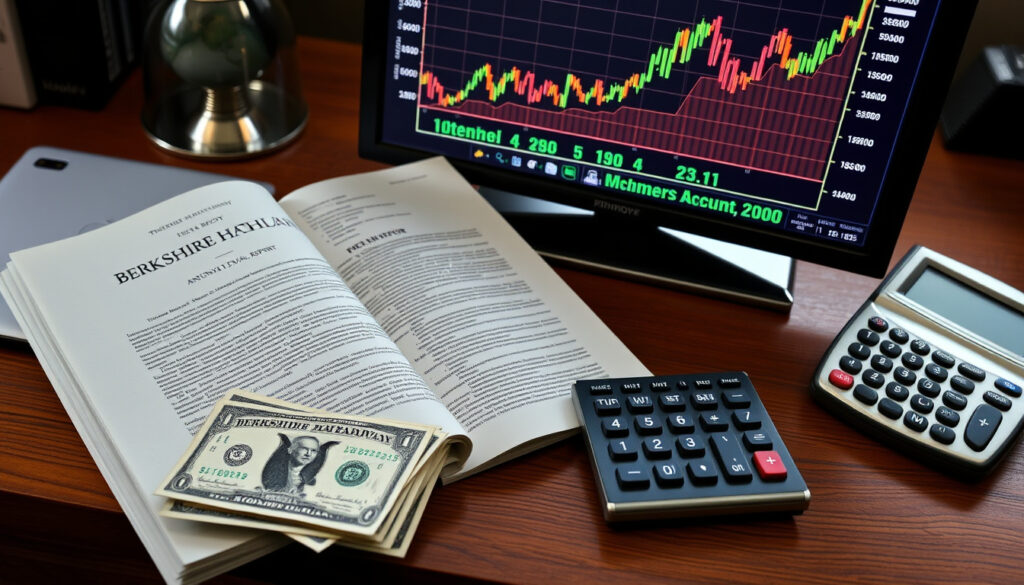
Warren Buffett: Biography, Net Worth & Investing Strategy
Few investors have shaped the way we think about money quite like Warren Buffett. His journey from a paperboy in Omaha to a net worth of $146 billion is a story of patience, discipline, and principles anyone can apply. This article breaks down his life, his investing rules, the companies he owns, and the answers to the most common questions people ask about him.
Net worth: $146 billion (as of May 2025) ·
Age: 94 (born August 30, 1930) ·
Company: Berkshire Hathaway (chairman and former CEO) ·
Known for: Value investing, philanthropy ·
Residence: Omaha, Nebraska
Quick snapshot
- Chairman and former CEO of Berkshire Hathaway (Wikipedia)
- Net worth exceeding $100 billion (Wikipedia citing Forbes)
- Donated billions to charity (Wikipedia)
- Still holds Coca-Cola shares as of 2024 (EBSCO Research Starters)
- Exact details of his personal religious beliefs (Investing.com)
- Specific reasons for his wife’s move to San Francisco in 1977 (Wikipedia)
- Future political endorsements (Investing.com)
- 1930: Born in Omaha (Wikipedia)
- 1941: Bought first stock at age 11 (Investing.com)
- 1956: Founded Buffett Partnership Ltd. (HBO documentary)
- 1965: Took control of Berkshire Hathaway (EBSCO Research Starters)
- 1988: Began buying Coca-Cola (EBSCO Research Starters)
- 2006: Pledged 99% of wealth to charity (Wikipedia)
- 2024: Announced Greg Abel as successor (Wikipedia)
- Greg Abel to succeed as CEO of Berkshire Hathaway (Wikipedia)
- Continued annual donations to the Gates Foundation (Wikipedia)
- Potential political endorsements in future elections (Investing.com)
Eight key facts in one place: Buffett’s biography, from birth to net worth.
| Full name | Warren Edward Buffett |
| Born | August 30, 1930, Omaha, Nebraska, U.S. |
| Occupation | Investor, philanthropist |
| Title | Chairman and former CEO of Berkshire Hathaway |
| Net worth | $146 billion (May 2025) |
| Spouse | Susan Buffett (m. 1952; died 2004), Astrid Menks (m. 2006) |
| Children | 3 (Susan, Howard, Peter) |
| Education | University of Nebraska–Lincoln (BS), Columbia University (MS) |
How did Warren Buffett get rich?
Early investments and partnerships
Buffett started investing at age 11 with money from delivering newspapers, buying his first stock for $38 (Investing.com). After studying under Benjamin Graham at Columbia Business School (Investing.com), he formed Buffett Partnership Ltd. in 1956 (HBO documentary).
Berkshire Hathaway transformation
In 1962 he began accumulating shares in Berkshire Hathaway, a failing textile manufacturer, and took control in 1965 (EBSCO Research Starters). He transformed it into a holding company that owns GEICO, See’s Candies, and hundreds of other businesses (Wikipedia).
Key principles of value investing
Buffett’s strategy is to buy undervalued companies with durable competitive advantages and hold them long-term (Google Books). He famously said: “Rule No. 1: Never lose money. Rule No. 2: Never forget Rule No. 1.”
Buffett didn’t get rich by trading fast — he built wealth by letting compounding work over decades through concentrated, high-conviction bets.
The pattern: Discipline and patience, not timing the market, created his fortune.
What is the 70/30 rule Buffett?
Origin of the rule
Buffett himself advised his trustee to put 90% of his wife’s inheritance in a low-cost S&P 500 index fund and 10% in short-term government bonds (Wikipedia). The “70/30 rule” is a common misattribution that blends his advice with other allocation strategies (Investing.com).
Buffett actually recommends a 90/10 stock-bond split for the long-term investor — far more aggressive than the popular 70/30 rule.
Application to personal finance
He consistently advocates index funds over stock-picking for the majority of investors (Investing.com). The key, he says, is to keep costs low and stay invested through market cycles.
Comparison with other allocation strategies
Most robo-advisors recommend between 60/40 and 80/20 stocks/bonds. Buffett’s 90/10 is more equity-heavy, suitable only for those with a very long time horizon and strong stomach for volatility.
The implication: If you’re not comfortable with a 90% stock allocation, you’re following advice that’s safer — but not Buffett’s true recommendation.
Does Warren Buffett still own Coca-Cola?
Berkshire Hathaway first bought Coca-Cola shares in 1988, and the company has held them ever since (EBSCO Research Starters). As of 2024, Berkshire still holds approximately 400 million shares, making it one of the largest positions in its portfolio (Wikipedia).
| First purchase year | 1988 |
| Current shares | ~400 million |
| Percentage of Berkshire portfolio | ~7-9% |
| Dividends collected (annual) | ~$700 million |
Buffett has called Coca-Cola a “wonderful business” and praised its brand moat. He has never sold a single share.
The pattern: This holding exemplifies his buy-and-hold approach — a single bet paying $700 million annually in dividends.
Why did Warren Buffett’s wife leave him?
Separation from Susan Buffett
In 1977, Susan Buffett moved to San Francisco to pursue a music career and personal independence, though she and Warren remained legally married until her death in 2004 (Wikipedia). The separation was amicable, and they continued to travel together and share a close friendship.
Relationship timeline
Warren and Susan married in 1952. After the separation, Astrid Menks — a close friend of Susan — moved in with Warren and later married him in 2006 (Wikipedia). Susan reportedly arranged the relationship before her death.
Impact on philanthropy
Susan’s influence shaped Buffett’s giving. After her death, he accelerated his philanthropic pledges, including the 2006 commitment to give 99% of his wealth to the Gates Foundation and other charities (Wikipedia).
The pattern: Personal life decisions and philanthropic mission were intertwined — Susan’s move freed Buffett to focus on business while she pursued her own path.
Does Warren Buffett support Trump?
Political donations history
Buffett has historically supported Democratic candidates. He donated to Hillary Clinton in 2016 and has been a longtime supporter of Barack Obama (Investing.com). He has not contributed to Donald Trump’s campaigns.
Public statements on presidents
Buffett has criticized some Trump policies — such as trade tariffs — but has also praised certain tax reforms and deregulation that benefited Berkshire’s businesses (Investing.com). He generally avoids partisan endorsements during his annual meetings.
Berkshire Hathaway policy on political endorsements
Berkshire Hathaway does not endorse political candidates. Buffett has said he speaks only for himself, not for the company or its shareholders.
With Buffett’s age, his political voice may grow quieter — but his personal donations will continue to shape Democratic fundraising.
What does Warren Buffett say about Jesus?
Religious views expressed in interviews
Buffett has described himself as agnostic. In a 2002 Fortune interview, he said: “I don’t believe in a god that rewards the good and punishes the bad.” He has expressed admiration for Jesus as a historical figure but does not subscribe to Christian doctrine (Investing.com).
Berkshire Hathaway annual meeting comments
At annual meetings, Buffett has deflected religious questions, stating that faith is a personal matter. He sometimes jokes that his religion is “value investing.”
Comparison with other public figures
Unlike many successful business figures who speak openly about faith, Buffett deliberately keeps his beliefs private — reinforcing his “all business, no spectacle” persona.
Timeline of Warren Buffett’s Life
- 1930 – Born in Omaha, Nebraska (Wikipedia)
- 1941 – Bought first stock at age 11 (Investing.com)
- 1956 – Founded Buffett Partnership Ltd. (HBO documentary)
- 1965 – Took control of Berkshire Hathaway (EBSCO Research Starters)
- 1988 – Began buying Coca-Cola shares (EBSCO Research Starters)
- 2006 – Pledged 99% of wealth to philanthropy (Wikipedia)
- 2024 – Announced Greg Abel as his successor (Wikipedia)
Clarity: Confirmed facts vs. What’s unclear
Confirmed facts
- Buffett is chairman and former CEO of Berkshire Hathaway (Wikipedia)
- He has a net worth exceeding $100 billion (Wikipedia citing Forbes)
- He has donated billions to charity (Wikipedia)
- He still holds Coca-Cola shares as of 2024 (EBSCO Research Starters)
What’s unclear
- Exact details of his personal religious beliefs (Investing.com)
- Specific reasons for his wife’s move to San Francisco in 1977 (Wikipedia)
- Future political endorsements (Investing.com)
Quotes from Warren Buffett
“Rule No. 1: Never lose money. Rule No. 2: Never forget Rule No. 1.”
— Warren Buffett, as recorded in multiple biographies (Wikipedia)
“If you’re in the luckiest 1% of humanity, you owe it to the rest of humanity to think about the other 99%.”
— Warren Buffett, annual letter to Berkshire Hathaway shareholders (Wikipedia)
“A low-cost index fund is the most sensible equity investment for the great majority of investors.”
— Warren Buffett, 2013 letter to Berkshire shareholders (Wikipedia)
For an investor who owns index funds, the implication is clear: stop trying to beat the market and let compounding do its job. For a Berkshire shareholder, the message is different: trust the long-term buy-and-hold approach that built this company.
For readers interested in a comprehensive look at the Oracle of Omaha, there is a comprehensive Vietnamese biography covering his early life and career milestones.
Frequently asked questions
What is Warren Buffett’s investment strategy?
Value investing: buying great companies at attractive prices and holding them for decades. He focuses on durable competitive advantages (moats) and strong management.
How much is Warren Buffett worth?
As of May 2025, Forbes estimates his net worth at $146 billion.
What companies does Berkshire Hathaway own?
Major holdings include GEICO, See’s Candies, Coca-Cola, Apple, American Express, and BNSF Railway.
Is Warren Buffett still alive?
Yes, as of May 2025, Buffett is alive at age 94.
What is Warren Buffett’s most famous quote?
“Rule No. 1: Never lose money. Rule No. 2: Never forget Rule No. 1.”
How did Warren Buffett start investing?
At age 11, he bought his first stock for $38 using savings from delivering newspapers.
What is the 90/10 rule Buffett recommends?
In his 2013 letter, he advised leaving 90% of cash in a low-fee S&P 500 index fund and 10% in short-term government bonds.
Does Warren Buffett give away his money?
Yes, he pledged 99% of his wealth to philanthropy, mostly through the Bill & Melinda Gates Foundation.
Related reading
- Peter Jackson: Wealth, Career, and Life Story — Biography of another mega-successful public figure
- S&P/ASX 200 Index: What It Is and How It Works — Understanding the index funds Buffett recommends
More related posts
 Dylan Wang Relationship Status: Is He Married or Single
 Hermione Corfield: Biography, Movies and Latest News
 Mt Cook vs Everest: Why It’s One of the Hardest Climbs
 Jenna Jameson: Career, Illness, Net Worth & Leaving Porn
 GLP-1 Reviews: Worth It? Side Effects & Weight Loss Truth
 Age Pension Calculator – Estimate Rates Eligibility Australia
 Justin Baldoni: Biography, Net Worth, Blake Lively Feud
 Indiana Evans 2025: What Happened to the Actress
