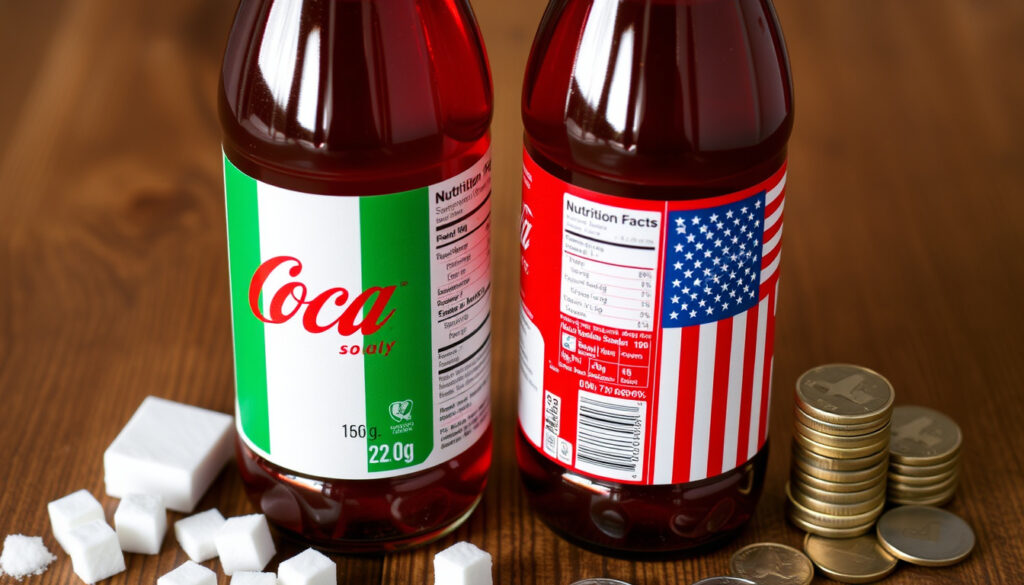
Coca‑Cola in Ireland vs U.S.: Taste, Health, and Investment
A Coca-Cola in Dublin tastes noticeably different from one in New York. The difference comes down to the sweetener, and it’s part of a larger story about how the world’s most famous soda varies by country, where it’s produced, and what that means for your health and your wallet.
Year founded: 1886 ·
Countries with Coca-Cola sales: 200+ ·
Coca‑Cola market cap: ~$270 billion (as of 2025) ·
Full‑year 2025 net revenues: $47.9 billion
Quick snapshot
- Coca‑Cola in Ireland is bottled under license by Coca‑Cola HBC, not directly by the parent company (Wikipedia – global bottling structure)
- Taste difference between Ireland and the U.S. is driven by sweetener: sugar in Europe, high‑fructose corn syrup in the U.S. (BBC News – US corn syrup usage)
- Coca‑Cola is not sold in Cuba and North Korea due to U.S. embargoes (Wikipedia – global presence)
- Which zero‑sugar variant (Coke Zero vs Diet Coke) is healthier – no official health‑body consensus (University of Houston – nutrition data only)
- Exact proprietary recipe differences between Irish and U.S. Coca‑Cola beyond sweetener type (Wikipedia – ingredient variation noted)
- 1886: Coca‑Cola invented by John Pemberton in Atlanta (Wikipedia – history)
- July 2025: President Trump announces Coca‑Cola has agreed to use real cane sugar in U.S. drinks (BBC News)
- 2025 full‑year results: Coca‑Cola reports organic revenue growth of 5% (Coca‑Cola Investor Relations – official results)
- Potential U.S. recipe shift to cane sugar could narrow the Ireland‑U.S. taste gap (Newsweek – Trump announcement)
- Nutrition transparency is improving: Coca‑Cola HBC committed to colour‑coded labels (Coca‑Cola HBC – nutrition policy)
| Attribute | Value | Source |
|---|---|---|
| Founded | 1886 | Wikipedia – history |
| Global sales countries | 200+ | Wikipedia – global presence |
| Coca‑Cola HBC Ireland bottling | Bottling partner since 1990s | Wikipedia – bottling network |
| Sweetener in Ireland | Sugar (sucrose) | Wikipedia – ingredient variation |
| Sweetener in U.S. | High‑fructose corn syrup | BBC News – corn syrup usage |
| Full‑year 2025 net revenues | $47.9 billion | Coca‑Cola Investor Relations – official press release |
Is Coca‑Cola made in Ireland?
Contrary to what some might assume, The Coca‑Cola Company itself does not operate bottling plants in Ireland. Instead, production is handled by a licensed bottler under a franchise model that has been in place for decades.
Bottling operations in Ireland
- Coca‑Cola HBC (Hellenic Bottling Company) is the licensed partner for Ireland and Northern Ireland. The company bottles, distributes, and markets Coca‑Cola products for the local market (Wikipedia – bottling network).
- In 2014, Coca‑Cola’s UK and Ireland unit committed to colour‑coded (traffic‑light) nutrition labelling to improve transparency (just‑drinks – policy commitment).
Irish consumers aren’t buying a drink made by the Atlanta headquarters — they’re buying a product from a local bottler that adapts ingredients and labelling to regional norms. That franchise model is the root of many taste and nutrition differences.
The implication: if you’re drinking Coke in Dublin, you’re tasting a product shaped by local regulations and supply chains, not a global standard formula.
Why does Coca‑Cola taste different in Ireland?
The most frequently cited reason is the sweetener. In the U.S., the standard Coca‑Cola recipe has long relied on high‑fructose corn syrup (HFCS) because of government sugar quotas and corn subsidies. In Ireland and most of Europe, cane sugar (sucrose) is used instead.
Differences in sweeteners and recipes
- According to BBC News, the U.S. formulation currently uses HFCS. However, in July 2025, President Trump said Coca‑Cola had agreed to switch to real cane sugar in U.S. drinks, a move that could eventually harmonise the taste.
- Wikipedia notes that Coca‑Cola ingredients vary by country and that European versions typically use sucrose, while American versions use HFCS.
- Consumer taste tests consistently show that drinkers perceive the sucrose‑sweetened version as smoother and less syrupy (Newsweek – consumer reactions to potential change).
Even if the U.S. switches to cane sugar, the full recipe (including caramel colour blend and phosphoric acid concentration) is proprietary and may still differ between countries. A complete taste alignment is unlikely.
What this means: the sweetener switch in the U.S. would narrow but not eliminate the transatlantic taste gap.
What is the healthiest Coke to drink?
The Coca‑Cola lineup includes several zero‑sugar options, but “healthiest” depends on what you’re optimising for: calories, artificial sweeteners, or overall nutritional profile.
Coca‑Cola Zero Sugar vs. Diet Coke
- Both contain zero sugar and negligible calories. A 12 oz can of regular Coca‑Cola contains 140 calories and 39 g of sugar (The Coca‑Cola Company – FAQ ingredient info).
- Coca‑Cola Zero Sugar uses a blend of aspartame and acesulfame potassium, while Diet Coke relies primarily on aspartame (Wikipedia – formulation comparison).
- Health authorities have not declared one zero‑sugar variant healthier than the other; choice is largely about taste preference (University of Houston – nutrition PDF calorie data only).
For consumers trying to reduce sugar intake, either option is a massive improvement over regular Coke. But neither is a health drink — research from the Access to Nutrition Initiative recommends that Coca‑Cola improve transparent nutrition labelling across all markets (Access to Nutrition Initiative – 2024 assessment).
The pattern: choosing between Coke Zero and Diet Coke is a matter of taste, not health advantage.
Who is richer, Pepsi or Coke?
When comparing the two beverage giants, it’s important to distinguish between market capitalisation (which reflects investor perception of future profits) and total revenue (which includes all business segments).
| Metric | Coca‑Cola | PepsiCo | Source |
|---|---|---|---|
| Market cap (2025) | ~$270 billion | ~$240 billion | Wikipedia – Coca‑Cola / Wikipedia – PepsiCo |
| 2025 net revenue | $47.9 billion | ~$86 billion (FY2024) | Coca‑Cola Investor Relations / Wikipedia – PepsiCo |
| Net profit margin (estimated) | ~22% | ~10% | Wikipedia – financials |
Coca‑Cola sports a higher market cap and better profit margins, but PepsiCo’s larger revenue is driven by its snack division (including Frito‑Lay). For pure soda profitability, Coca‑Cola wins; for total business scale, PepsiCo leads.
The catch: a market cap comparison tells you which company investors value more, not which sells more product.
Which two countries don’t sell Coca‑Cola?
Despite being available in more than 200 countries and territories, Coca‑Cola is absent from two nations due to long‑standing trade and political embargoes.
Countries where Coca‑Cola is not available
- Cuba – U.S. embargo has prevented Coca‑Cola’s entry since 1962 (Wikipedia – global presence).
- North Korea – U.S. trade restrictions and the country’s isolation mean no official distribution (Wikipedia – global presence).
- In both cases, rival brand PepsiCo has found ways to sell its products, creating a peculiar gap in Coca‑Cola’s otherwise universal footprint (Wikipedia – competition notes).
If U.S. trade policy shifts, either Cuba or North Korea could become the next new market for Coca‑Cola – a move that would instantly add millions of potential consumers.
The implication: political embargoes, not market demand, are the only barriers to Coca‑Cola’s global expansion.
Timeline
- 1886 – Coca‑Cola invented by John Pemberton in Atlanta, Georgia (Wikipedia – history).
- 1990s – Coca‑Cola HBC begins bottling operations in Ireland (Wikipedia – bottling network).
- July 2025 – President Trump announces Coca‑Cola’s agreement to switch U.S. recipe to cane sugar (BBC News).
- February 2026 – Coca‑Cola reports full‑year 2025 net revenues of $47.9 billion (Coca‑Cola Investor Relations).
Clarity check
Confirmed facts
- Coca‑Cola in Ireland is bottled under license by HBC (Wikipedia)
- Taste difference is due to sweetener: sugar vs HFCS (BBC News)
- Coca‑Cola not sold in Cuba and North Korea (Wikipedia)
- Regular 12 oz Coke contains 140 calories and 39 g sugar (The Coca‑Cola Company)
- Coca‑Cola Zero Sugar and Diet Coke contain zero sugar (The Coca‑Cola Company)
What remains unclear
- Which zero‑sugar variant is healthier – no medical consensus
- Exact full recipe differences beyond sweetener – proprietary
- Whether U.S. will fully switch to cane sugar – announcement only, not yet implemented
What the sources say
“Coca‑Cola Zero Sugar has zero sugar and 0 calories, while Diet Coke also contains no sugar.”
The Coca‑Cola Company – official FAQ
“Coca‑Cola uses corn syrup in its U.S. drinks, but President Trump said the company had agreed to use real cane sugar.”
BBC News – July 2025 report
Bottom line for investors and consumers
Coca‑Cola’s global footprint is unmatched, but its product is far from uniform. For the Irish consumer, the difference in sweetener means a noticeably different drink than the U.S. version, and that gap may narrow only if the American recipe changes. For investors, the brand’s consistent profitability and dividend history make it a defensive holding, but the real growth story lies in emerging markets – not in the debate over HFCS vs sugar. For the health‑conscious, both zero‑sugar options are equally effective at cutting calories, but neither replaces water. The decision, ultimately, comes down to taste and personal values.
Related reading: Coca-Cola Ireland vs US: Cane Sugar vs Corn Syrup Differences · Coca-Cola Investment Returns and Stock Performance Guide
The comparison of Coca-Cola in Ireland versus the U.S. gains further context when considering the Irish boycott and health discussion surrounding the brand.
Frequently asked questions
Does Coca‑Cola contain caffeine?
Yes, a 12 oz can of Coca‑Cola contains 34 mg of caffeine (The Coca‑Cola Company).
How many calories are in a can of Coca‑Cola?
A 12 oz can of regular Coca‑Cola contains 140 calories (University of Houston nutrition PDF).
Is Coca‑Cola vegan?
Most varieties of Coca‑Cola are considered vegan, as they do not contain animal-derived ingredients. However, some specialty flavours may vary (Wikipedia).
What is the history of Coca‑Cola?
Coca‑Cola was invented in 1886 by John Pemberton in Atlanta, Georgia. It was initially sold as a medicinal tonic before becoming a global soft drink (Wikipedia).
Where is Coca‑Cola headquartered?
The Coca‑Cola Company is headquartered in Atlanta, Georgia, USA (Wikipedia).
How does Coca‑Cola compare to Pepsi in market share?
Coca‑Cola commands a larger share of the carbonated soft drink market globally, though PepsiCo dominates the snack category (Wikipedia).
Why did Coca‑Cola change its recipe in 1985?
The 1985 “New Coke” reformulation was intended to compete with Pepsi’s sweeter taste, but it was met with widespread backlash. The original formula returned as Coca‑Cola Classic within months (Wikipedia).
More related posts
 Jill Scott: Career, Divorce, and Roy Keane Friendship
 Hermione Corfield: Biography, Movies and Latest News
 Yahoo Mail Login – Secure Access Guide and Fixes
 Travis Head: Biography, Stats, IPL Future & Net Worth
 Je ie Toy Story: Character Guide, Catchphra e & More
 Dining Table Sets in Ireland: Top JYSK & IKEA Picks
 Stamp Duty Calculator NSW – Official Revenue Tool and Rates Guide
 Crown Princess Cruise Ship: Reviews, Dress Code & Dining Tips
